
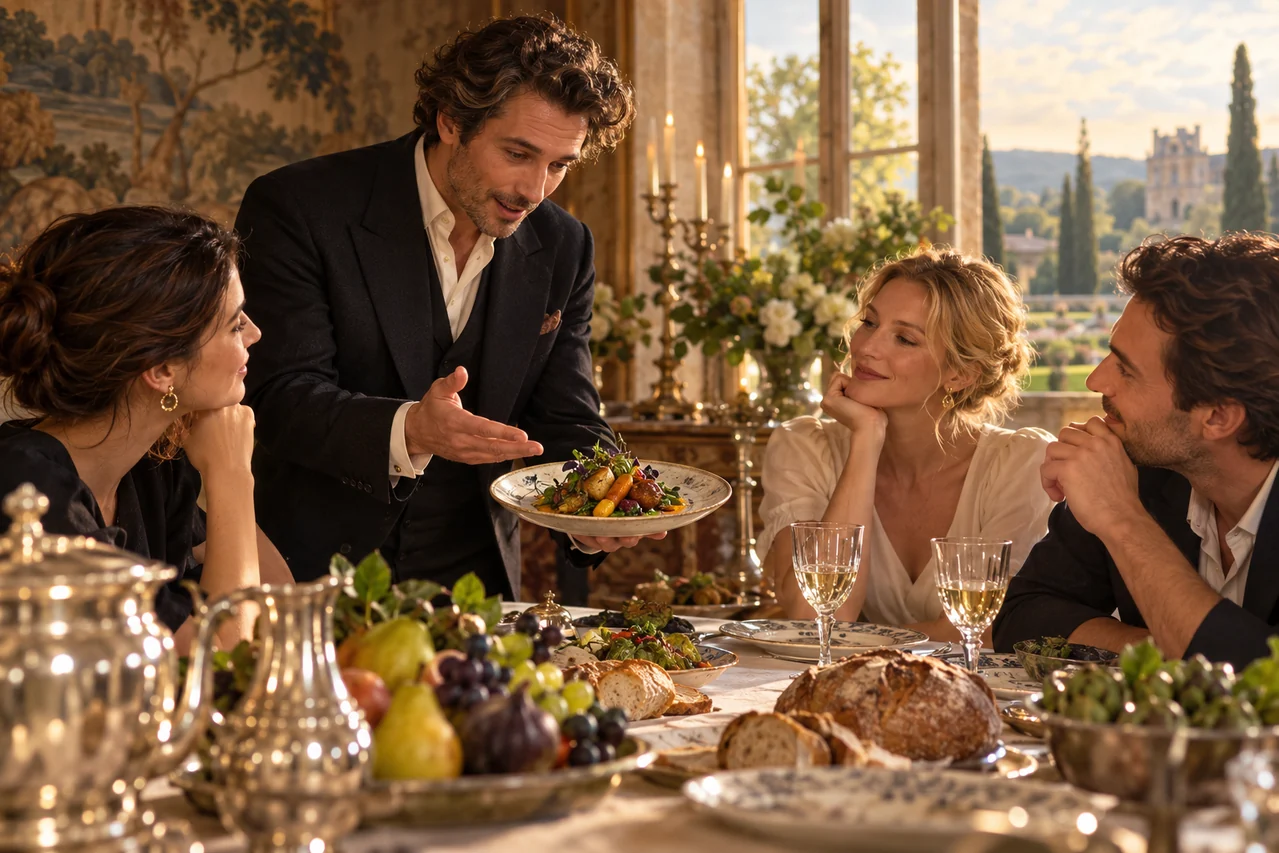
There was no universal royal menu
The seventeenth century saw important developments in elite French cooking, but they unfolded over time and varied with circumstances. A single list of dishes cannot represent every meal associated with Louis XIV's world. Season, household, occasion and religious calendar mattered. Travelers benefit from a framework that explains what shaped choices rather than an invented menu presented as universally authentic. That approach leaves room for a cultural dinner to interpret the period honestly, with clarity about what is historical context and what belongs to today's experience.
Meat displayed access and abundance
Aristocratic tables could offer meats, poultry and game according to resources and occasion. Products from estates connected the meal with landholding and the privileges around it. Abundance conveyed something about the household, not merely appetite. Yet the table of a prince was not a typical French table. The contrast should remain central: what elites could display says as much about inequality as about a national cuisine. A history of food becomes more useful when access is examined alongside culinary preparation.
Fish connected belief with logistics
Religious observances helped shape the importance of fish in particular circumstances. Freshness and transport then became practical challenges for a household preparing to receive. The organization of a grand dinner makes that connection clear. The famous story of Vatel's last reception belongs within this broader setting, rather than supporting a claim that one late ingredient alone explains his death. Food choices came from overlapping demands, and a delivery could carry social significance because those demands were difficult to separate.
Gardens supplied more than decoration
Vegetables, herbs and fruit had a place at elite tables, countering the caricature of old cuisine as nothing but heavy meat. Productive gardens supported the household as well as contributing to its prestige. Versailles's royal kitchen garden offers a relevant example of the attention given to horticultural supply. For travelers, the connection between garden and table can be especially engaging. It shows how a meal depended on work and cultivated environments beyond the dining room, giving seasonal produce a historical rather than merely fashionable significance.
Sugar and sweets expressed privilege
Sugar was costly and prestigious, and sweet preparations belonged to the development of elite food culture. Fruits and confectionery could contribute to the services, but the modern category of dessert should not be transferred unchanged to every seventeenth-century meal. The sequence and meanings differed. A cultural account can explain those differences without fabricating a recipe history. It should also avoid the unsupported claim that Vatel invented Chantilly cream; his organizational role is substantial enough without a convenient culinary invention attached to his name.
Wine needs its own historical context
Wine formed an important part of the food world, but production, consumption and service differed from contemporary tasting practice. A dinner set within the Grand Siècle should not be described as though its participants followed the conventions of today's wine professionals. The useful question is what wine's availability and use reveal about the period. If an itinerary later turns toward Veuve Clicquot, the chronology must remain clear: that introduces another era and another story, rather than retroactively supplying seventeenth-century tables with a later Champagne identity.
Global products carry difficult histories
Expanding trade helped circulate prestigious products, with colonial commerce and systems of domination behind parts of that circulation. Food history cannot be reduced to a cheerful account of new flavors arriving in Europe. The table can reveal connections between luxury consumption and unequal global relationships. The history of these products adds another layer to the elite table, connecting the enjoyment of rare ingredients with the unequal conditions through which they circulated. Even a careful general distinction reminds travelers that an ingredient's cultural meaning includes how people obtained it and who bore the costs.
Interpretation can be truthful without exact reproduction
A contemporary gastronomic experience may draw inspiration from historical food culture without claiming that every dish reproduces a documented seventeenth-century recipe. Dinner with Vatel can use service, conversation and context to communicate the period's social world. For advisors, the distinction helps position the experience credibly: food becomes a route into hierarchy, religion, trade and hospitality. The guest enjoys a meal while understanding more about what made an aristocratic table possible, rather than consuming an unverified claim of perfect historical reconstruction.
FOR YOUR GUEST ITINERARIES
For guests who want food to reveal history as well as flavor, contact Elyrea about connecting a Vatel dinner Encounter with a wider gastronomic itinerary.
Discuss your itinerary