
A prestigious festival caught by a national crisis
The 21st Festival de Cannes opened in May 1968 as student and labor unrest spread across France. The event initially retained its international ceremony, films in competition and celebrated jury. It could not remain outside the country hosting it. In Paris, the crisis surrounding the Cinémathèque française and the temporary removal of Henri Langlois had already mobilized part of the film world. Strikes and demonstrations then widened the conflict. When filmmakers, critics and industry professionals carried that tension into the Palais, they were not merely disrupting a screening. They raised a political question: could a festival continue its celebration as though nothing had changed while workers, students and cultural institutions confronted a national rupture?
From the Langlois affair to the events of May
In February 1968, the replacement of Henri Langlois at the Cinémathèque française sparked a major mobilization among filmmakers and cinephiles. His return in April did not erase the conflict. It demonstrated that cinema professionals could organize against official decisions. Cannes opened in that context with a restored print of Gone with the Wind while demonstrations in Paris intensified. On May 13, the French film critics’ association called on people at the Festival to join the national movement. The sequence matters. Cannes did not stop because a few stars staged an impulsive red-carpet episode. The interruption emerged from weeks of cultural dispute and social unrest, carried south into an institution that normally presented itself as an international world apart.
The Palais became a forum
Filmmakers arriving from Paris, including François Truffaut and Jean-Luc Godard, joined the occupation of the Palais. Discussion concerned solidarity with striking workers and students, but also the structures of French cinema and its relationship with contemporary life. The Festival became an assembly as much as a venue for screenings. That transformation was not consensual. Industry professionals, audiences, journalists and organizers did not share one analysis or method. A simple story of courageous artists confronting a blind institution would flatten the conflict. The significance of 1968 lies in a collision among legitimate aims: showing films, supporting a national movement and reconsidering how cinema was financed, governed and represented.
On May 18, the competition came apart
The interruption took concrete form on Saturday, May 18. Louis Malle resigned from the jury, followed by Monica Vitti, Roman Polanski and Terence Young. Several directors withdrew their films from competition. When Carlos Saura’s Peppermint Frappé was due to screen, opponents held the curtain closed and a physical confrontation followed. Those images fixed the episode in public memory, but they do not explain it by themselves. The decisive change was institutional. Jury resignations and film withdrawals made the competition increasingly impossible to operate. Cannes had not simply lost control of one screening. The mechanism meant to produce an official set of awards was disintegrating.
May 19: an ending without awards
At noon the following day, General Delegate Robert Favre Le Bret announced that the Festival’s board had decided to halt the event because screenings could no longer proceed under normal conditions. The 1968 edition therefore ended early and without awards. Precise language matters. Cannes was not canceled before it began; it opened, screened films and functioned for several days before being interrupted. That distinction also separates 1968 from the planned 1939 festival, which the outbreak of war prevented from becoming a full first edition. The first complete Cannes festival took place in 1946. May 1968 was a crisis of a different kind: an institution already in motion stopped by political and professional revolt.
How the episode changed the history of Cannes
The interruption did not instantly transform every institution in French cinema, but it left a durable mark. The Estates General of French Cinema expressed a wish to rethink production, distribution and power. In 1969 the Directors’ Fortnight emerged as an independent selection in the wake of the protests. The official Festival also evolved, making room for contemporary forms and politically engaged work. Cannes hotels and the Festival’s backstage world shows the event as an ecosystem joining art, industry, press and social ritual. May 1968 made that network visible at the moment its ordinary operations broke down.
Tell the story without reenacting the fight
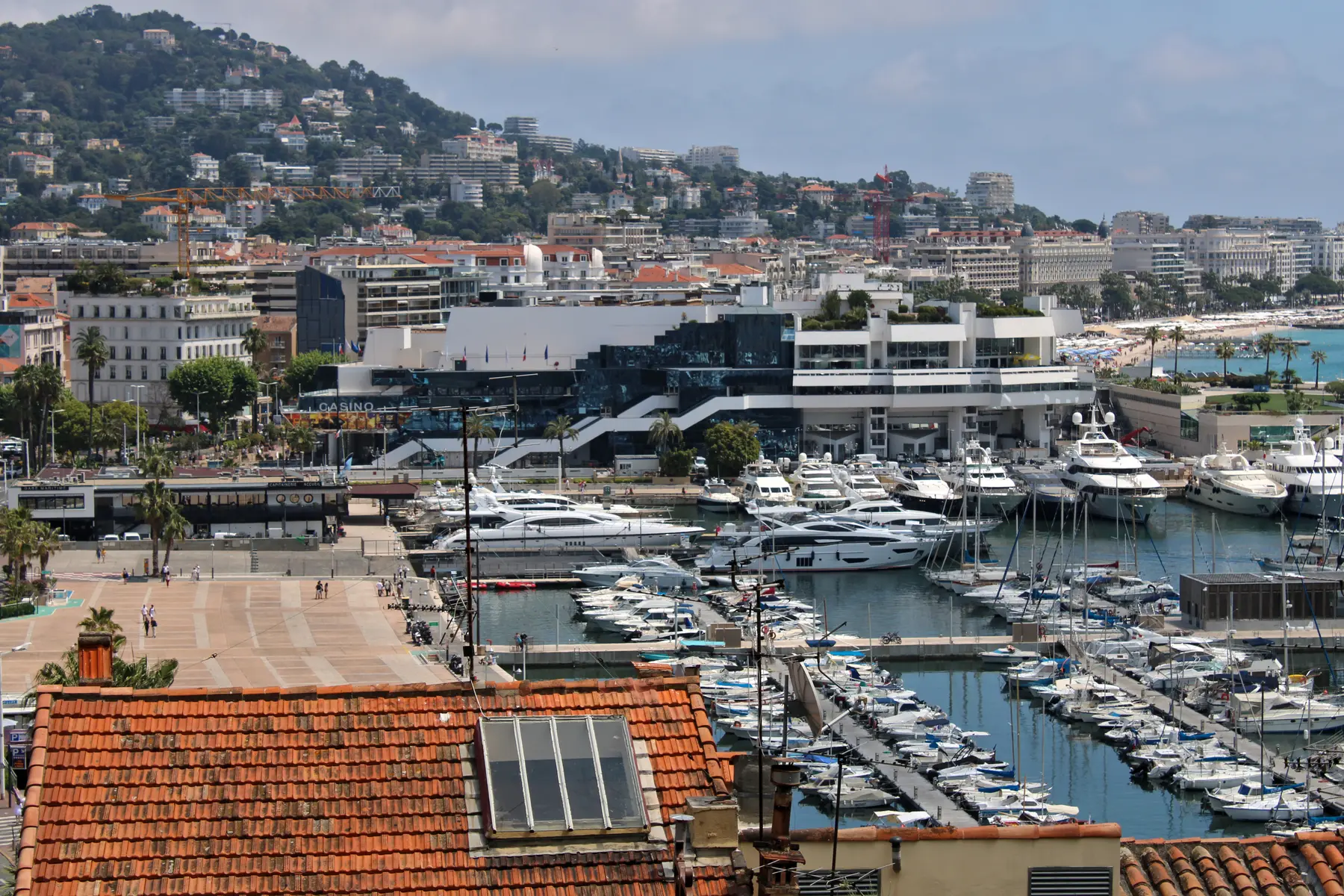
The Elyrea Encounter centered on cinema in Cannes can explore tensions among glamour, artistic creation and power without claiming to reproduce the debates word for word. Quentin Tarantini, the character associated with this world, is fictional. He must never be confused with Quentin Tarantino or assigned the real director’s films, biography or statements. Guests should understand that theatrical convention clearly. The current Palais is also not the building in which the 1968 events occurred, so interpretation must distinguish the contemporary site from the historical venue. A conventional tour or an Encounter with Quentin Tarantini? helps advisors choose the right approach.
B2B guidance: use 1968 as a lens
For travel advisors, the story moves beyond the red carpet, stars and Palme d’Or without dismissing their significance. A route can begin with today’s ritual, return to the chronology of May 1968 and then ask how a major cultural institution balances continuity, solidarity and protest. The angle suits cinephiles, guests interested in political history and professional groups curious about cultural governance. Planning a premium cinema day in Cannes helps integrate the conversation without overloading the itinerary. Access and Palais programming require separate confirmation. The theme remains valuable because its central question is still alive: what can culture do when society demands a break with normality?
FOR YOUR GUEST ITINERARIES
Planning a private cultural itinerary? Elyrea can help you weave this perspective into your guests’ journey.
Discuss your itinerary