
A small flower became a signature
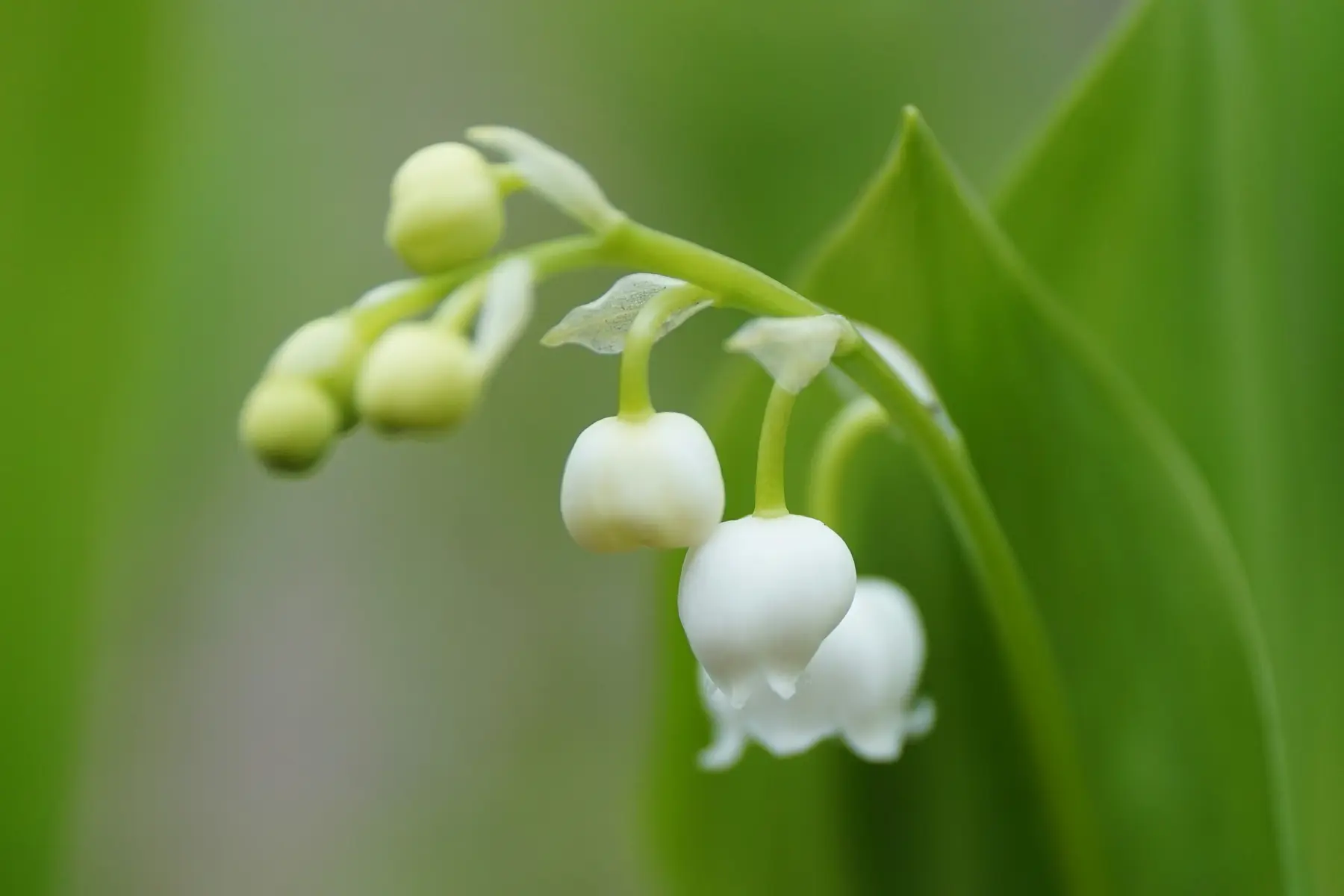
Christian Dior associated lily of the valley with spring, fair weather and the return of the haute couture season. La Galerie Dior describes it as one of his most persistent lucky charms. The plant is hardly monumental: white bells hide beneath leaves while their scent seems surprisingly large for their scale. That contrast suits Dior’s world, where a detail can organize an entire silhouette. Lily of the valley linked personal memory, the French May Day calendar and fashion’s seasonal renewal. It became more than a decorative motif—a private sign capable of entering the public language of a house.
Superstition, pockets and hems
Dior and the Musée Christian Dior portray the designer as deeply superstitious. House tradition says he carried a sprig during fashion shows and placed the flower in selected garments or hems. These details belong to Dior’s official heritage narrative; they should not be presented as independently verified for every dress leaving the atelier. Their logic is nonetheless revealing. Inside 30 Avenue Montaigne was a world of intense discipline, and the talisman introduced a controlled measure of uncertainty. Amid fittings, clients and the judgment of the press, a fragile flower offered the designer a personal ritual.
A May Day wish shared across the house
In France, giving lily of the valley on May 1 is a familiar wish for happiness. La Galerie Dior recalls that the flower was offered throughout the house on that date. A private charm became a collective ritual connecting the designer to sales staff, premières, models and artisans whose work made each collection possible. That collective dimension matters. Couture carries one person’s name while depending on a community of highly specialized labor. Lily of the valley expressed gratitude without erasing the period’s hierarchy. It turned luck into a seasonal gesture and grounded the Paris fashion house in a French custom readily understood by international guests.
From the 1954 collection to the Muguet dress
According to La Galerie Dior, the spring-summer 1954 collection devoted an entire line to lily of the valley. In spring-summer 1957, the Muguet dress became an emblematic design within the Libre line. The flower was no longer only hidden in a pocket; it structured the visible imagination of a garment. A personal sign had become creative material without losing its emotional charge. How the New Look changed fashion in 1947 reveals the same integrated method. Silhouette, naming and botanical reference worked together to construct the coherent world of Dior.
Diorissimo and the silent flower
Diorissimo translated lily of the valley into perfume in 1956. Perfumer Edmond Roudnitska faced a paradox: the plant’s natural scent cannot be extracted in the way that some floral materials can. La Galerie Dior therefore calls it a silent flower. The fragrance had to recreate an impression through an accord built from other materials rather than bottle the plant’s essence directly. The technical detour is unusually expressive. It resembles couture, which does not copy nature but constructs a sensation through cut, volume and fabric. Diorissimo is not an olfactory specimen from a garden; it is an interpretation, faithful in intention rather than literal in method.
From childhood gardens to Paris
Dior’s botanical imagination is often connected to the garden of his childhood home in Granville, now associated with the museum bearing his name. It would be too simple to derive every motif from one memory. Flowers also belong to textile history, decorative arts and the luxury trade. Lily of the valley gained power because it joined these registers: a Norman childhood, a national custom, the rhythm of collections and Paris refinement. Christian Dior and postwar Paris places this language in a city hungry for renewal. The spring flower becomes a quiet metaphor for reconstruction without needing to serve as a political manifesto.
What house memory can establish
The richest present-day accounts of Dior’s lily of the valley come from Dior, La Galerie Dior and the Musée Christian Dior. They provide access to collections, objects and the house’s interpretation of its founder. That proximity is valuable, but it requires transparent reading. Collection dates and Diorissimo’s creation are documentary anchors; repeated details about every hem also participate in a corporate tradition preserved and staged by the brand. Distinguishing those registers does not diminish the story. It shows how a couture house creates heritage by conserving, displaying, narrating and selecting symbols able to connect generations of work.
B2B guidance: let one detail open an entire world
For international travel advisors, lily of the valley is an effective entry point because it connects couture, fragrance, gardens and French custom without promising a sale, availability or privileged access. The Elyrea Christian Dior Encounter can turn the charm into a conversation about collection pressure, collective atelier labor and the transformation of memory into brand language. The botanical photograph used here documents the plant; it does not depict a Dior dress or archival object. That visual honesty avoids misleading substitution. Guests leave with a simple but fertile key: in couture, the smallest signs may carry the emotional architecture of an entire house.
FOR YOUR GUEST ITINERARIES
With Elyrea, follow Christian Dior’s lily of the valley through superstition, couture and perfume for a more intimate reading of the Paris house.
Discuss your itinerary