
Prior knowledge is not the same as curiosity
A guest may know almost nothing about Napoleon and want every detail. Another may have read extensively and prefer an emotional encounter to another lecture. The first mistake is therefore to confuse available knowledge with appetite for learning. Advisors need to understand how a client relates to the subject. Do they enjoy asking questions, comparing evidence, observing objects, following narrative or simply feeling that a place has become legible? This distinction adjusts depth without dividing travelers into cultured people and beginners.
Three useful profiles, held lightly
A flexible framework uses three profiles. The discoverer needs a clear chronology and a few memorable people. The enthusiast recognizes the major events and wants causes, nuance and contradiction. The specialist brings references and hopes to test an interpretation, source or rarely discussed angle. These are not permanent labels. The same person may be expert in painting and new to political history. Preparation should therefore focus on the precise subject rather than make assumptions about general education.
Begin with the right question
A strong experience need not open with a date. It can begin with a question that accommodates several levels: why did a queen seek privacy, how does a couture house create a symbol, what could a soldier actually see while approaching a beach? The novice enters through situation, the enthusiast recognizes the stakes and the specialist can debate the evidence. How to prepare guests for a historical Encounter establishes that frame without revealing the narrative. A shared question creates conversation rather than a knowledge test.
Adjust context instead of removing rigor
Tailoring does not mean diluting. Guests new to a subject need essential markers tied to places, gestures and decisions. Informed guests may need less introductory chronology and more time for uncertainty, historiographical debate and unexpected consequences. Accuracy remains constant in both cases. What changes is the amount of context required to make detail meaningful. This protects newcomers from overload and experienced travelers from hearing a summary they already know.
Let interaction calibrate the experience
An embodied Encounter quickly reveals what activates the guests. Their first questions show whether they want orientation, comparison or evidence. A performer can develop one path and shorten another without making the program feel improvised. That responsiveness distinguishes live exchange from content delivered identically every time. It still depends on rigorous preparation: meaningful improvisation requires a deep historical base. The advisor’s contribution is to share interests, previous reading and any sensitive subjects before the experience.
Connect the depth to the itinerary
The right level also depends on what guests have already seen. An Encounter before a museum can supply essential keys; afterwards it can answer questions and shift attention toward a person’s lived world. Should the experience come before or after the museum? examines that decision. Travelers leaving two hours of galleries rarely need another inventory. They benefit from a perspective, contradiction or narrative that connects objects to the society that produced them.
Protect the pleasure of highly informed guests
A specialist does not necessarily want more dates. They often value a cleaner distinction among fact, tradition and interpretation. Show why sources diverge, how a myth formed or what an archive cannot prove. Designing art travel beyond museums demonstrates that depth also comes from environment, exchange and time to observe. Intellectual luxury is not accumulation. It is the freedom to slow down around the question that truly deserves discussion.
B2B guidance: pass on four decisive details
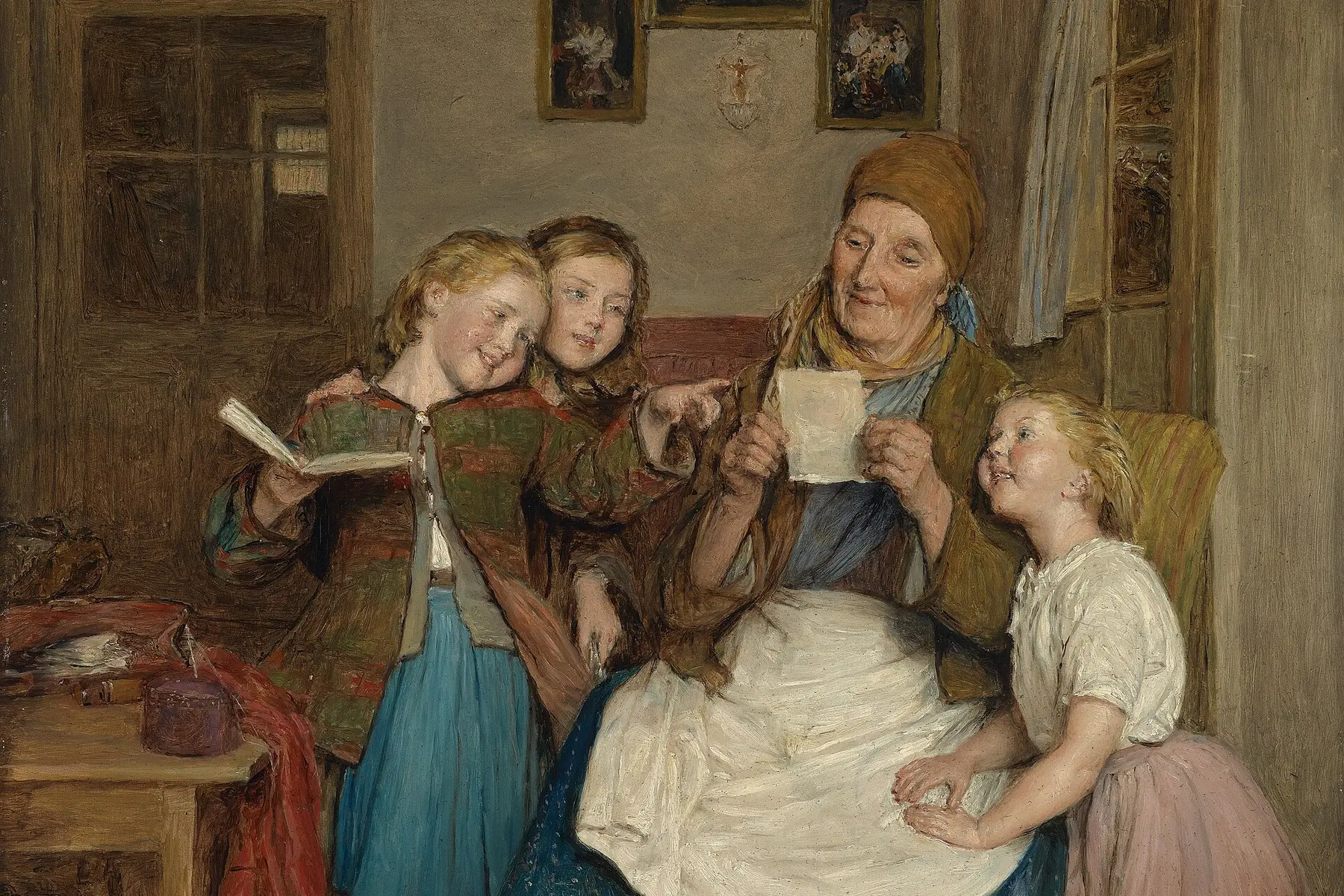
Before recommending an experience, advisors can share four points: what guests already know, what they hope to understand, how they prefer to learn and what else is planned that day. Those details are more useful than requesting something simply “accessible” or “expert.” The painting used here shows several generations gathered around one story; it illustrates shared learning, not an Elyrea performance. Good calibration creates a similar result: people enter through different doors and leave with one conversation in common.
FOR YOUR GUEST ITINERARIES
Elyrea helps travel houses select an Encounter whose depth, pace and perspective genuinely match their guests.
Discuss your itinerary