
There is no empty time in a beautifully paced itinerary
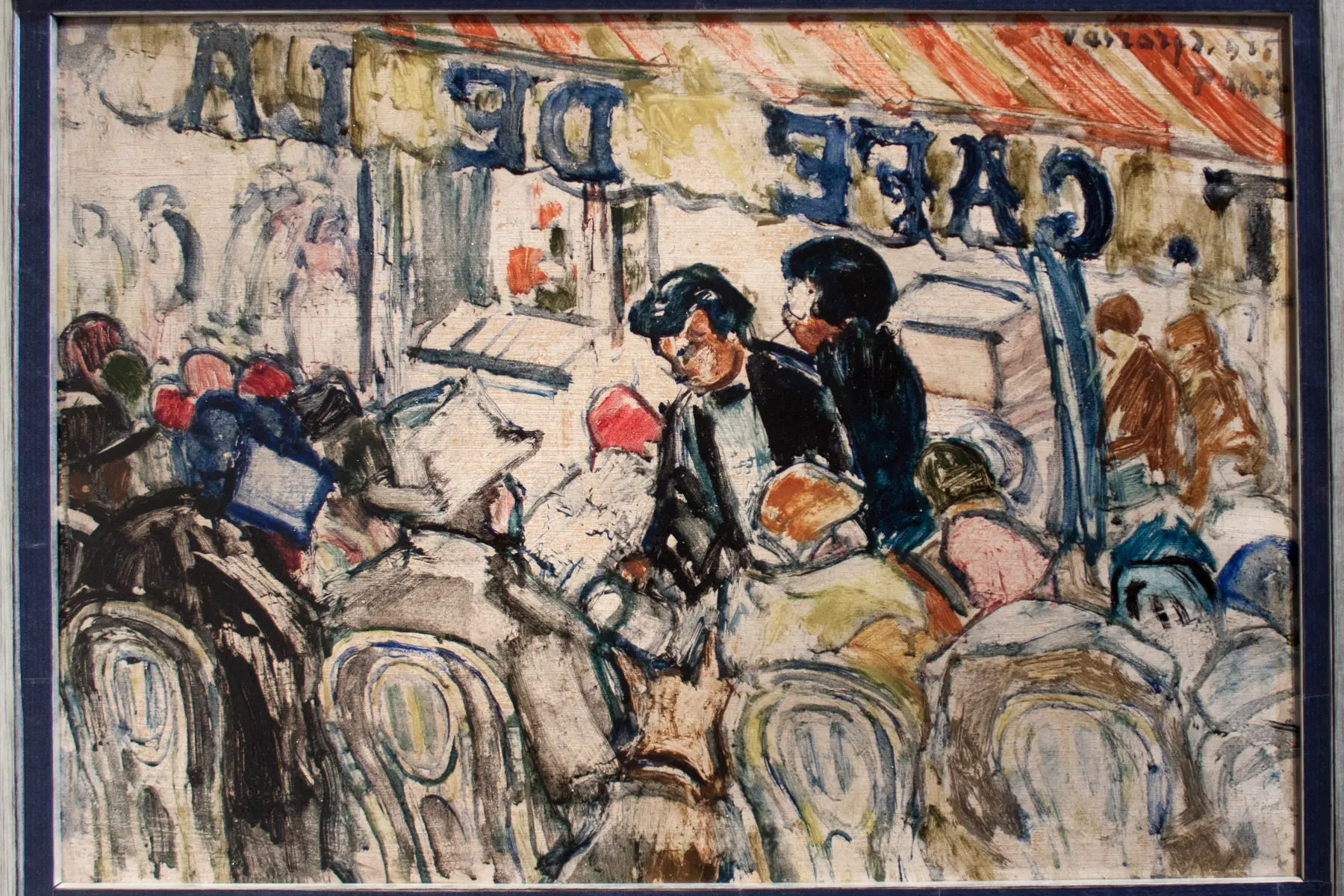
Thirty minutes without a ticket, guide or monument may look unproductive on a proposal. In practice, that interval often determines whether a day feels gracious or compressed. Guests need time to leave a gallery, collect belongings, find a driver, discuss what they have seen or simply let one image settle before the next narrative begins. Premium travel is not defined by the maximum number of addresses. It is defined by continuity and a sense of control. A calendar filled to the edge turns every minor delay into a threat and every spontaneous conversation into a problem. A deliberate buffer does the opposite: it gives travelers the feeling that the day belongs to them. János Vaszary’s painted Paris terrace evokes this urban pause; it is historical artwork, not a representation of current service or availability at any venue.
In Paris, a short map distance may hide a long transition
Two landmarks that appear close can require more time than expected. The useful calculation includes gallery corridors, coat check, security, elevators, the walk to a legal pickup point, traffic and the final approach on foot. In historic districts, the most comfortable drop-off is rarely the front door. A Seine crossing or move between arrondissements also behaves differently by hour, weather and street conditions. Advisors should therefore separate driving time from full transition time. The latter begins when the guest actually leaves the first host and ends when everyone is ready for the next appointment. When deciding whether to schedule a cultural experience in the morning, afternoon or evening, this distinction is more useful than mileage alone. It aligns geography with human energy.
Attention needs an airlock after a museum
A substantial museum visit asks guests to look closely, remember context and sustain conversation. Moving directly into a second complex story can flatten both experiences into one stream of information. The reset does not need to become another attraction. A few minutes in a garden, a quiet car ride, coffee or a simple lunch can change the mental register. It also allows the guide or advisor to hear what genuinely resonated: a work of art, an architectural detail or an unexpected question. The next segment can then be adjusted with finesse. This is not a medical rule or a universal stopwatch. Some enthusiasts want to continue immediately; other guests recover attention through silence. Luxury lies in preparing both possibilities before fatigue becomes visible, not in calling an emergency pause after the day has already lost its shape.
Thirty minutes, one hour or longer?
As a planning range, about thirty minutes may work when venues are genuinely adjacent, access is controlled and the second format is light. An hour creates a safer margin for a neighborhood change, refreshments or a small delay. Sixty to ninety minutes can support a real lunch or a more decisive reset after a long visit and before a demanding private encounter. These are planning ranges, never transfer guarantees; the date, access constraints and guest profile still require confirmation. The essential principle is to avoid treating buffer time as space that must be filled. Adding a shop, detour or minor attraction merely because a gap appears defeats its purpose. The interval succeeds precisely when it remains available for the actual day—whether that means conversation, rest, a graceful recovery from delay or an unhurried arrival.
Let the meal support the story
Lunch often forms the hinge of a cultural day. Too short, and it extends the pressure of the morning; too formal or distant, and it can make the second appointment uncertain. The right choice depends on service style, geography and the conversation opened by the first visit. A seated meal may be where guests connect a work of art to family history or a wider journey. A carefully chosen snack may preserve an ambitious afternoon. Either way, the schedule must include seating, ordering, service and departure rather than counting only time at the table. On the first day in the city, an arrival-day cultural experience requires even more restraint. Jet lag, rail disruption and hotel access matter more than the elegance of an ideal schedule built from a desk.
Guest profiles change the margin
A family with young children, a multigenerational party, a traveler using mobility support and guests who enjoy photography do not cross Paris at the same pace. Allowing more time does not lower the cultural ambition. It enables demanding content without turning movement into an ordeal. Needs should be handled discreetly: elevator routes, seated pauses, accessible entrances, a return to the hotel or an option for one guest to rejoin later. Advisors should also ask how much spontaneity the client wants. Some travelers value a precise structure; others want freedom to enter a bookshop or continue a compelling discussion. Buffer time then becomes a designed form of personalization, not a vague reserve tacked onto the day. It protects dignity while keeping the intellectual promise of the itinerary intact.
Put guide, driver and reservations on the same clock
A smooth day requires every partner to understand more than the published start time. Which exit will the driver use? Does the guide escort guests to the vehicle? Who alerts the next host if a discussion runs long? Which element can be shortened without losing the day’s central idea? Decisions made in advance keep operational mechanics out of the guest’s view. They matter especially when a timed museum entry follows a monument or a private narrative encounter. Choosing the order of an encounter, monument and museum creates an intellectual progression; the buffers preserve it in the real city. A useful operating schedule therefore includes scenarios as well as times: early, nominal and reasonably delayed. The client sees calm because the team has already imagined variation.
B2B guidance: sell rhythm, not a chain of appointments
In a client proposal, breathing room can be named with intention: guided transfer, private pause, conversational lunch, linking walk or hotel reset. This shows that time has been designed without pretending every minute requires entertainment. Two experiences that guests fully inhabit usually create more value than a third added at the cost of constant haste. Elyrea can work from the advisor’s real constraints—arrival time, hotel address, mobility, appointment length and cultural priorities—to define a separate margin for each transition. The result is not a less ambitious program. It is an itinerary capable of absorbing the city as it exists, protecting the guide’s best work and giving international travelers the rare pleasure of never looking at a watch with anxiety.
FOR YOUR GUEST ITINERARIES
Elyrea designs private cultural days whose pacing protects curiosity, conversation and the pleasure of discovering Paris.
Discuss your itinerary