
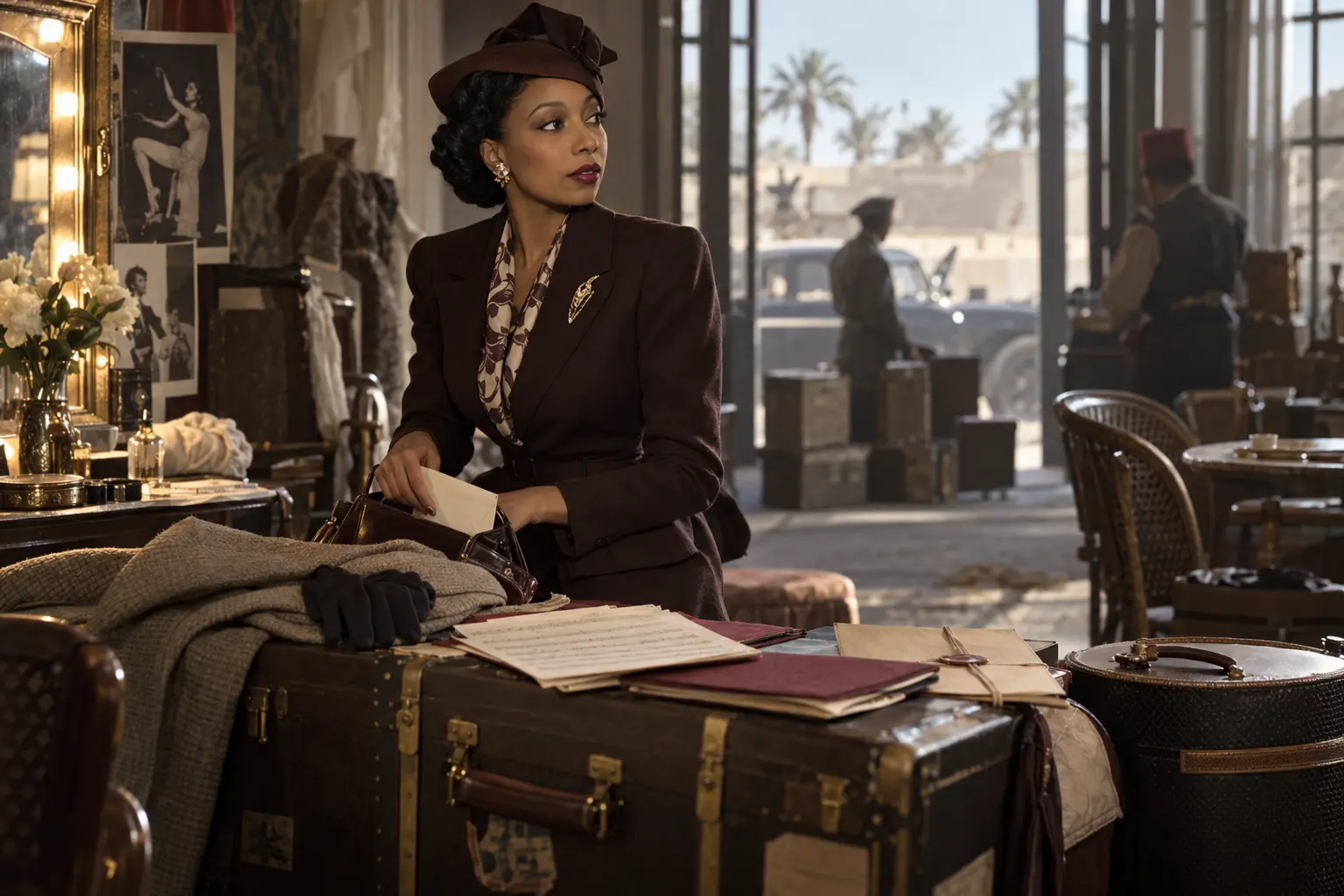
An international career could provide a believable reason to travel
By 1939 Josephine Baker was more than a Paris celebrity. She was an internationally recognized performer accustomed to hotels, receptions, border crossings and conversations with people from many countries. That visibility attracted attention, yet it also made certain movements and social contacts less surprising than they would have been for an unknown civilian. When she served France, her profession became a practical asset. It could bring her near diplomatic and social circles, allow her to listen, and place travel within a public identity that already made sense. Retelling the story requires restraint. Institutional sources confirm intelligence work and support for Allied forces, but they do not turn every engagement into a documented secret mission. The distinction matters. Baker’s courage becomes more comprehensible when it is grounded in specific choices and sustained service rather than reconstructed as a continuous sequence of cinematic escapes.
The commitment came before the best-known wartime tours
At the beginning of the conflict, Baker offered her services to France and became involved with military intelligence. Her contacts and public position could help gather information, while Les Milandes and trusted people around her formed part of a wider landscape of shelter and communication. After the 1940 armistice, the risks changed. She left metropolitan France and eventually continued her work from North Africa while maintaining a performing career. Chronology prevents a misleading conclusion: touring was not suddenly invented as an espionage device. It was an existing international profession to which liaison, observation and support were added. The popular image of messages carried in music attracts attention, and French memory institutions repeat the essential fact. Yet the less glamorous labor also deserves notice—reliability, careful relationships, difficult journeys and the patience required to remain useful over time.
Why sheet music, luggage and reputation mattered
A touring artist could reasonably carry costumes, scores, letters and personal belongings. Such objects created opportunities to conceal or transmit information while remaining consistent with Baker’s visible role. Official accounts mention confidential material hidden in sheet music, while biographical retellings add different details about notes and luggage. The general practice is well established, but individual anecdotes do not always rest on equally strong documentation. The responsible story identifies that difference. The important point is not the ingenuity of a prop fit for a thriller. It is that Baker used her relative freedom of movement on behalf of an organized effort involving many people. Celebrity did not eliminate searches, surveillance or danger. It offered a form of normality through which discreet action might sometimes pass. Her professional life functioned as both opportunity and risk, never as a magical disguise that guaranteed safety.
North Africa joined performance, illness and Allied service
Baker’s wartime geography extended through Morocco and North Africa. Serious health problems interrupted that period, a reminder that later images of tireless heroism can erase physical vulnerability. As the military situation developed, she performed for troops and supported the Allied and Free French effort. These appearances served several purposes. They raised morale, lent public visibility to the cause and used her drawing power on behalf of people at war. A military tour was therefore not merely camouflage for intelligence activity. It was a public act with emotional and symbolic value in its own right. This broader view keeps the performer and the resister from becoming separate characters. The stage remained her instrument—sometimes a context for movement, sometimes a means of support, and sometimes a place where a fighting France could see itself represented by a Black Franco-American woman who had chosen its cause.
No celebrated resister worked alone
Heroic memory naturally concentrates attention on a recognizable name. Intelligence and resistance, however, depended on chains of officers, couriers, administrators, hosts, medical staff, soldiers and civilians willing to move a person or protect a message. Baker operated within structures coordinated by French counter-intelligence figures, not as an independent adventurer. Restoring that network does not diminish her achievement. It shows that she accepted discipline, secrecy and cooperation. It also leaves room for the many women whose contributions remained less visible because they did not possess an international postwar career. For travelers, the network offers a more mature way to understand resistance. Courage becomes a collective practice made of repeated decisions, practical skills and trust, often without any promise of recognition. Baker’s singular fame made her useful, but the usefulness depended on people whose names did not appear on theater marquees.
Official honors establish service without proving every legend
France formally recognized Baker’s wartime contribution. She received the Croix de Guerre and the Médaille de la Résistance and was appointed to the Légion d’honneur. She also served as a second lieutenant in the women’s auxiliary of the French Air Force. These distinctions cannot verify every colorful anecdote attached to her name, but they firmly establish the substance and significance of her commitment. They move the conversation beyond a false choice between glamorous legend and skeptical dismissal. The Centre des monuments nationaux now includes that service in the account of her 2021 entry into the Panthéon. Our article on Josephine Baker and Panthéon memory considers how public commemoration brings together performer, resister, civil-rights activist and Franco-American figure. Memory creates a meaningful portrait; historical interpretation must still show where evidence is precise and where retelling has polished uncertainty.
Designing a responsible Paris itinerary
In Paris, this story can connect entertainment history with institutions of memory without claiming that every address preserves a documented intelligence episode. The Théâtre des Champs-Élysées recalls Baker’s breakthrough in the 1925 Revue nègre. Interwar performance districts speak to the construction of celebrity. The Panthéon places wartime service within a national narrative. A coherent day keeps those periods distinct before showing how they inform one another. It should also address the racial stereotypes Baker confronted, her chosen relationship with France and her later anti-racist campaigning. The Elyrea Encounter centered on Josephine Baker offers an embodied point of view on Paris during the Occupation. It does not replace archives or the institutions named here, and current tickets, opening conditions and group arrangements must always be confirmed independently.
What an advisor should promise—and what to leave out
For clients interested in World War II, exceptional women or Franco-American history, the subject has immediate power. The honest promise is not a hunt for spy gadgets. It is an explanation of how a performer transformed the tools of her profession—mobility, public reputation, stagecraft and social networks—into forms of service. The brief should note the guests’ sensitivity to wartime subjects, their existing knowledge of Paris and the balance they want among performance, commemoration and civil rights. Cultural Paris for American travelers provides a natural continuation. By keeping documented facts, interpretation and memorable anecdotes at their proper levels, the advisor can create a deeply human day: not a portrait of an invulnerable heroine, but the story of a famous woman who chose to place her freedom of movement, her work and her voice at the service of a larger fight.
FOR YOUR GUEST ITINERARIES
Planning Paris around women, the Resistance or artists who acted on their convictions? Elyrea can help connect place, memory and rigorous storytelling.
Discuss your itinerary