
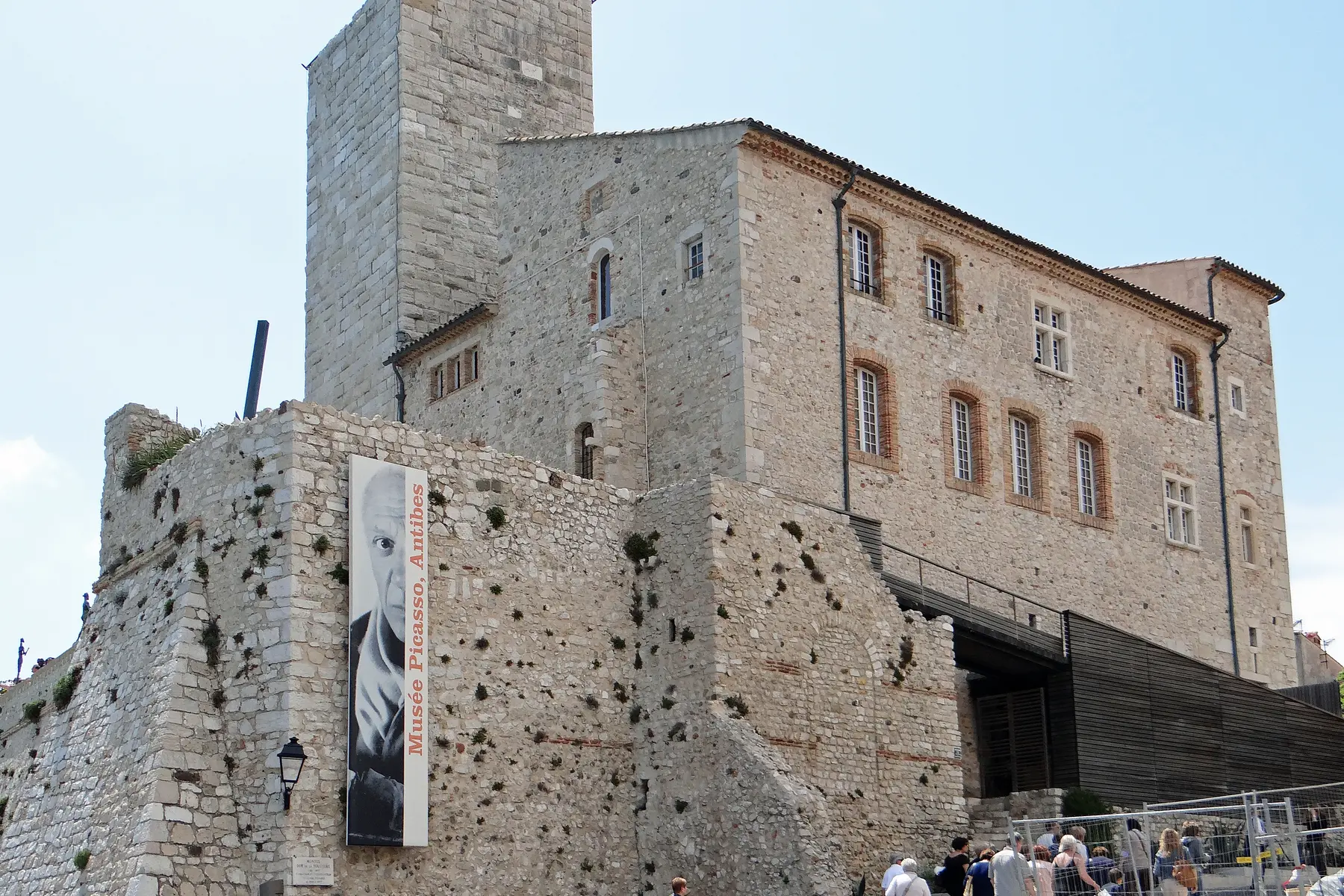
A château that was a museum before Picasso arrived
The story does not begin with Picasso. The City of Antibes acquired the Château Grimaldi in 1925, and scholar Romuald Dor de la Souchère established the Musée Grimaldi there. The building therefore already had a heritage mission when the artist came to the Riviera after the war. This chronology corrects a tempting shortcut: Picasso did not enter an abandoned château and single-handedly turn it into an institution. He encountered a curator, a collection and a city looking for ways to animate the site. That prepared setting made the 1946 episode possible and helps explain why work produced inside the château could move so quickly into public display.
1946: the offer of a studio inside the château
Dor de la Souchère invited Picasso to use part of the château as a studio. The proposal was practical and daring at once: a museum opened its rooms to contemporary creation instead of restricting itself to the conservation of the past. Picasso worked there for several months above the Mediterranean. Available materials, the postwar moment and the Antibes setting gave the period a distinct character. Picasso in Antibes in 1946 places this studio within the artist’s wider trajectory. The château was not a picturesque backdrop. It shaped the conditions of production and established the relationship from which the future museum would grow.
Twenty-three paintings and forty-four drawings left on deposit
At the end of his stay, Picasso left twenty-three paintings and forty-four drawings at the château. The City of Antibes describes them as being left on deposit, a distinction worth preserving. Automatically calling the act a donation would erase its more precise legal and institutional nature. The deposit nevertheless created an exceptional link between the works and the place where they were made. Visitors could encounter a body of work born in the same building. The numbers are striking, but their importance is not numerical alone. Paintings and drawings reveal different speeds of creation, from rapid investigation to more developed composition.
A Picasso room before a Picasso Museum
The Picasso room officially opened on September 22, 1947, while the institution’s name did not change immediately. In 1948, seventy-eight ceramics expanded the display and reflected a medium that became central during Picasso’s Mediterranean years. The institution therefore developed in stages: studio, initial deposit and successive additions. How the Château Grimaldi became the Picasso Museum traces that conversion from historic monument to a home for modern art. This gradual process matters for visitors because it replaces the myth of an instant foundation with the richer history of a sustained collaboration among an artist, a curator and a city.
The deposit changed the relationship between art and heritage
A historic museum typically displays works created elsewhere and assembled later. Antibes presents a different situation. The artist worked inside the future exhibition space, and a substantial part of that work remained there. The building became container, context and object of memory at the same time. The works are more than souvenirs of a famous visit; they document postwar renewal, Mediterranean geography and renewed engagement with antiquity. In a high-end cultural narrative, this proximity shifts attention from a globally recognized name toward the concrete mechanism by which a temporary residence gained institutional force. Place and collection explain one another.
1966: the château officially became the Picasso Museum
On December 27, 1966, the Château Grimaldi officially became the Musée Picasso. Twenty years separate the 1946 studio from that formal designation. The interval shows that an institution is not created by one spectacular gesture alone. It depends on municipal decisions, conservation, presentation and relationships maintained over time. Romuald Dor de la Souchère’s role alongside Picasso is essential to that continuity. Without his invitation and curatorial work, the stay might have remained a private episode. The 1966 name recognized a process that visitors had already begun to experience with the opening of the Picasso room in 1947.
Later additions belong to distinct chapters
The collections continued to grow after the 1946 deposit. The ceramics added in 1948, later gifts and acquisitions, and Jacqueline Picasso’s 1991 dation belong to different moments. Compressing them into one vague account would make the collection’s formation impossible to understand. A thoughtful visit distinguishes the body of work created at the château, additions that broaden the reading of Picasso and works by other modern artists held by the museum. That precision also prevents a misleading promise. Not everything displayed in Antibes was made in the 1946 studio, even though the studio remains the symbolic heart of the institution and the origin of its singular relationship with Picasso.
B2B guidance: interpret an act, not just a total
For itinerary designers, the figures twenty-three and forty-four make an effective opening, but they should not become a checklist. The decisive question is transformation: how did a curator, an artist, a city and a château create a new institution together? The Elyrea Encounter devoted to Picasso can connect the 1946 stay, the deposit’s status and the steps leading to the official museum. Advisors should confirm which works are actually on view for the visit and avoid promising permanent availability. The experience gains value when clients understand that the collection did not simply appear; it grew from a working relationship anchored in a specific place.
FOR YOUR GUEST ITINERARIES
Planning the French Riviera for art-focused clients? Elyrea can place this story within an Encounter devoted to Picasso.
Discuss your itinerary