
A first that requires precise language
In 1818, Madame Clicquot made what the house describes as the first known blended rosé Champagne. Each word matters. The claim does not mean that no pink sparkling wine had existed before or that rosé suddenly entered wine history. The documented innovation was methodological: adding red wine to a white Champagne blend in pursuit of a deliberate color, fruit profile and style. “First known” preserves appropriate historical caution; “blended” identifies the specific achievement. That precision turns a brand anecdote into a useful examination of craft. It also prevents advisors from promising a myth when the real technical decision is more compelling.
Before 1818, pink color followed other routes
Veuve Clicquot’s heritage account explains that before Madame Clicquot’s innovation, the hue of some rosé Champagnes was achieved by infusing white wine with elderberries and black grapes. Historical practice should not be flattened into one recipe, and a house source necessarily tells its own genealogy. It nevertheless clarifies Barbe-Nicole Clicquot’s problem: how to retain an attractive pink without compromising the quality she expected from the wine. Her objective was not merely to tint a cuvée. She sought to make color the coherent outcome of winemaking—a result connected to taste, balance and a demanding production method.
The decisive move: introduce red wine
Madame Clicquot combined her white wines with red Pinot Noir wine. The action sounds simple when compressed into one sentence; in practice, it involves proportion, origin, structure and balance. Red wine is not an external pigment. It contributes fruit, texture and its own vinous identity to a composition that must remain harmonious through secondary fermentation and aging. The house still connects its rosé to this blending logic. The historical interest is not a secret 1818 formula. It is the shift from searching for a pink appearance to using a repeatable, adaptable winemaking method in which color and flavor are designed together.
Innovation in style as well as process
Madame Clicquot is frequently associated with riddling, a process that helps clarify Champagne. How the riddling table transformed Champagne examines an innovation directed toward clarity and cellar efficiency. Blended rosé addresses a different aim: creating a sensory and visual profile. The two still share a discipline. Each begins with an insistence on quality, changes a cellar practice and makes a recognizable expression possible. How did Veuve Clicquot revolutionize Champagne? places these choices within an operating system rather than treating them as isolated flashes of genius.
Color becomes an act of composition
A blended rosé is not simply a matter of reaching the desired shade. The proportion and character of red wine affect aroma, texture and the way the whole develops. Blending therefore demands anticipation. A cellar master composes with wines that carry different years, origins and structures. For international guests, this is an unusually clear interpretive doorway. Visible color reveals an invisible architecture of decisions. Instead of asking only which tasting notes appear, the advisor can ask which technical choice made that sensation possible. The glass becomes evidence of composition rather than a decorative conclusion.
1818 followed an already international strategy
Four years earlier, Madame Clicquot had sent Champagne to Saint Petersburg as the Russian market reopened. Her commercial move in 1814 demonstrates her ability to connect quality, logistics and timing. The rosé of 1818 should not be presented as a proven response to a particular order or fashion without evidence. It belongs, however, to the same entrepreneurial period: a leader made product decisions, carried risk and gave her house distinctive signals. Technique and commerce were not separate stories. An innovation becomes durable when it can be understood, repeated and carried across markets without losing its identity.
What the image shows—and what it cannot
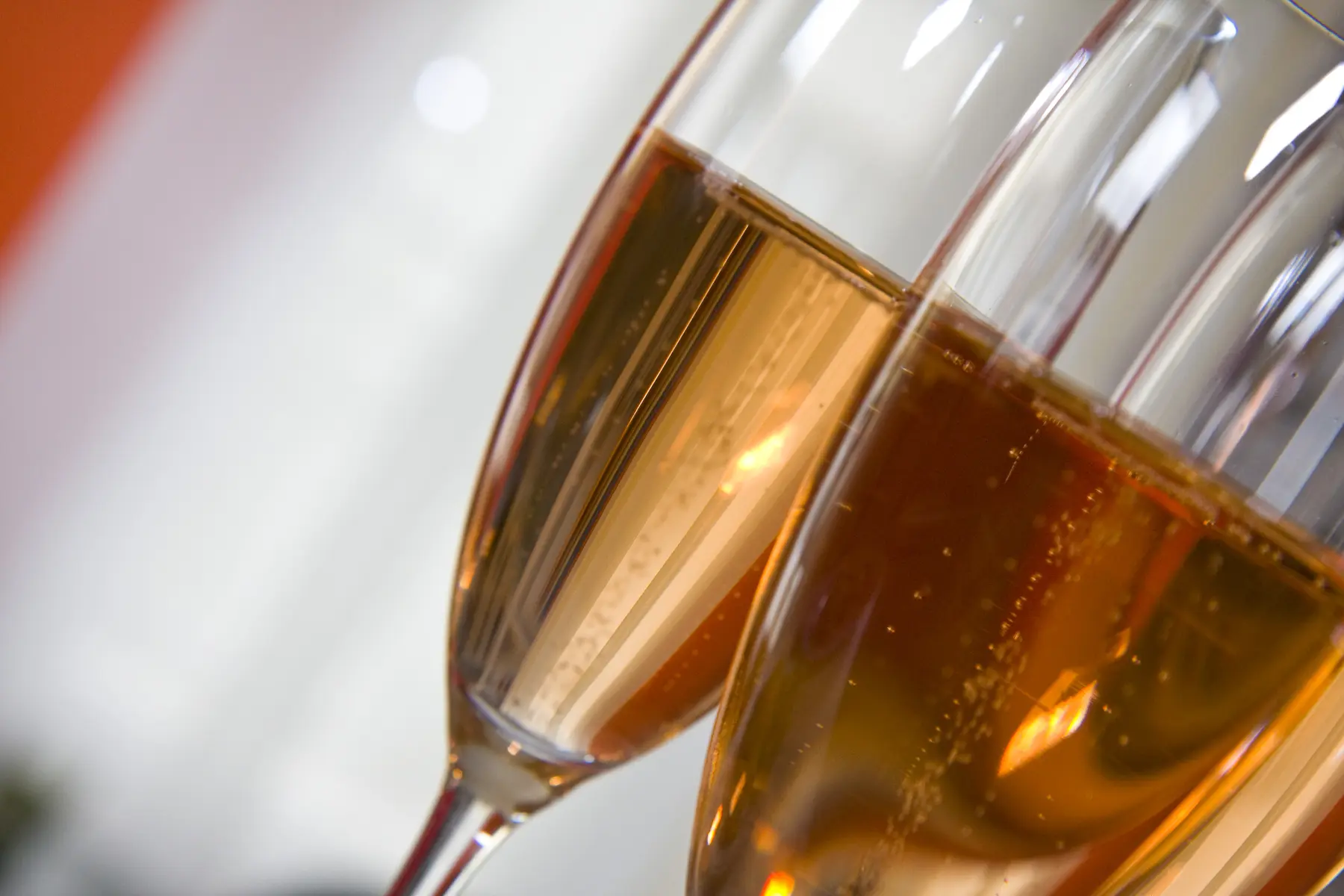
The photograph selected for this article shows a contemporary glass of rosé Champagne without a Veuve Clicquot bottle or label. It illustrates color and effervescence, but it does not depict the 1818 wine, a house archive or an actual Elyrea service. That visual honesty matters. No modern photograph can recover the taste of an early nineteenth-century cuvée. The image acts as an entry point: it makes the question of color immediate while the article distinguishes documented method, interpretation and present-day sensory experience. This prevents a generic visual from being mistaken for product evidence.
B2B guidance: let guests taste a decision
For travel advisors, the strongest framing presents rosé as a decision in composition rather than simply a festive color. The Elyrea Encounter with Madame Clicquot can connect cellar practice with a woman’s entrepreneurial authority without promising availability, a cellar visit, a bottle or a particular tasting unless separately confirmed. Invite guests to observe the hue and then consider what red wine contributes to a blend. They discover that Champagne luxury does not arise only from scarcity. It also comes from a technical choice precise enough to become a lasting language.
FOR YOUR GUEST ITINERARIES
With Elyrea, place the rosé of 1818 within Madame Clicquot’s entrepreneurial story and the creation of a distinctive Champagne style.
Discuss your itinerary