
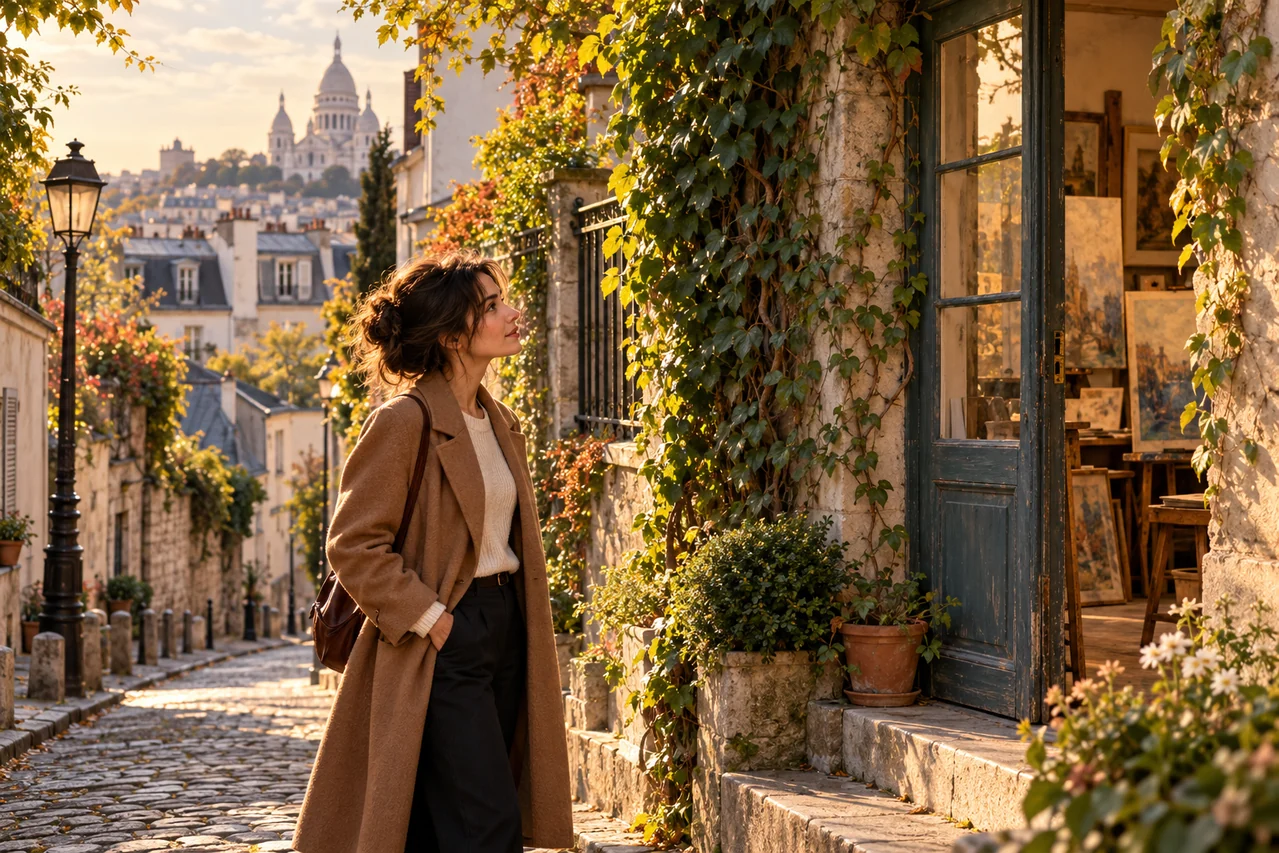
Familiar places can still yield new understanding
A repeat visitor does not have to avoid every recognizable location to find a different experience. The Moulin de la Galette can be understood as a place where leisure became a major artistic subject rather than another photograph. A street can connect work and social life rather than simply lead toward a viewpoint. The difference comes from interpretation. A compelling return visit adds a layer of meaning to an existing mental map, instead of claiming that the best-known district contains a completely untouched secret version.
Use a person to organize the return
Père Tanguy's color business and relationships provide a clear thread through art's practical life. He knew painters whose later fame is now familiar but whose recognition was not then secure. An Encounter through his perspective avoids turning the walk into a sequence of disconnected biographies. The visitor follows needs, support and circulation within an artistic environment. A recognizable figure from behind the scenes can reveal something new even to guests who already know many works associated with modern Paris.
Look at the economics behind the image
Artistic supplies, food, housing and a place to work mattered before museums recognized a painter's achievement. Those details often interest knowledgeable travelers because they explain what is absent from the completed masterpiece. The lives of painters before fame show why uncertainty deserves attention without romanticizing hardship. Montmartre can then be read as a network that helped people sustain work, rather than a romantic atmosphere that automatically created talent. Not all artists had identical resources or faced the same obstacles.
Keep successive artistic generations distinct
Renoir, Van Gogh and Picasso cannot be placed in one undifferentiated Impressionist community. Van Gogh's Paris years belong to a later context and his painting is generally associated with Post-Impressionism; Picasso's Bateau-Lavoir period belongs to the early twentieth century. A clear chronology gives the experienced visitor something more substantial than familiar name recognition. It explains how the neighborhood remained creative while the artistic concerns changed. Influence and shared geography matter precisely because they do not mean every painter belonged to the same movement.
Read landmarks by what they enabled
The Bateau-Lavoir brings studios and a later avant-garde into view, while the Lapin Agile introduces exchanges among painting, song and literature. Their relationship with the Moulin de la Galette shows different functions rather than three interchangeable stops. Even the Sacré-Cœur can be viewed as part of a changing historical skyline, not solely as a panorama. The aim is not to overload each location with dates, but to show why the district looks and means what it does now.
Adjust depth to the actual party
Collectors may want questions about reception, artistic networks and distinctions between movements. Families can begin with a concrete problem: an artist needs paints but has little money. Companions who are less interested in painting can follow ordinary life, the city and human relationships. The setting supports several levels of understanding without requiring everyone to recognize the same works. Advisors can share guests' interests when arranging the Encounter, confirming suitability rather than assuming a single script of commentary will satisfy every profile equally.
Allow the new perspective to settle
After the Encounter, time for a meal or an unhurried walk can be more valuable than adding several other attractions. Guests may want to revisit a facade or simply observe the district with the framework they have acquired. A later museum visit can connect those observations with paintings, while a separate excursion changes the scale. The cultural day should leave enough attention for such connections to emerge rather than exhaust the guest through a constant stream of information and appointments.
Continue toward a different artist–place relationship
Giverny and Auvers-sur-Oise extend the theme beyond the city. Monet's cultivated environment differs from the artistic network of Montmartre, while Van Gogh's last weeks introduce another biographical and pictorial chapter. Advisors can choose the continuation most relevant to guests without forcing every destination into one day. The successful return visit leaves travelers with a changed understanding of a familiar place and a reason to explore further, rather than merely a new list of addresses to say they have seen.
FOR YOUR GUEST ITINERARIES
For guests returning to Paris, Elyrea can help create a Montmartre chapter focused on artistic lives and a fresh interpretation of places they already recognize.
Discuss your itinerary