
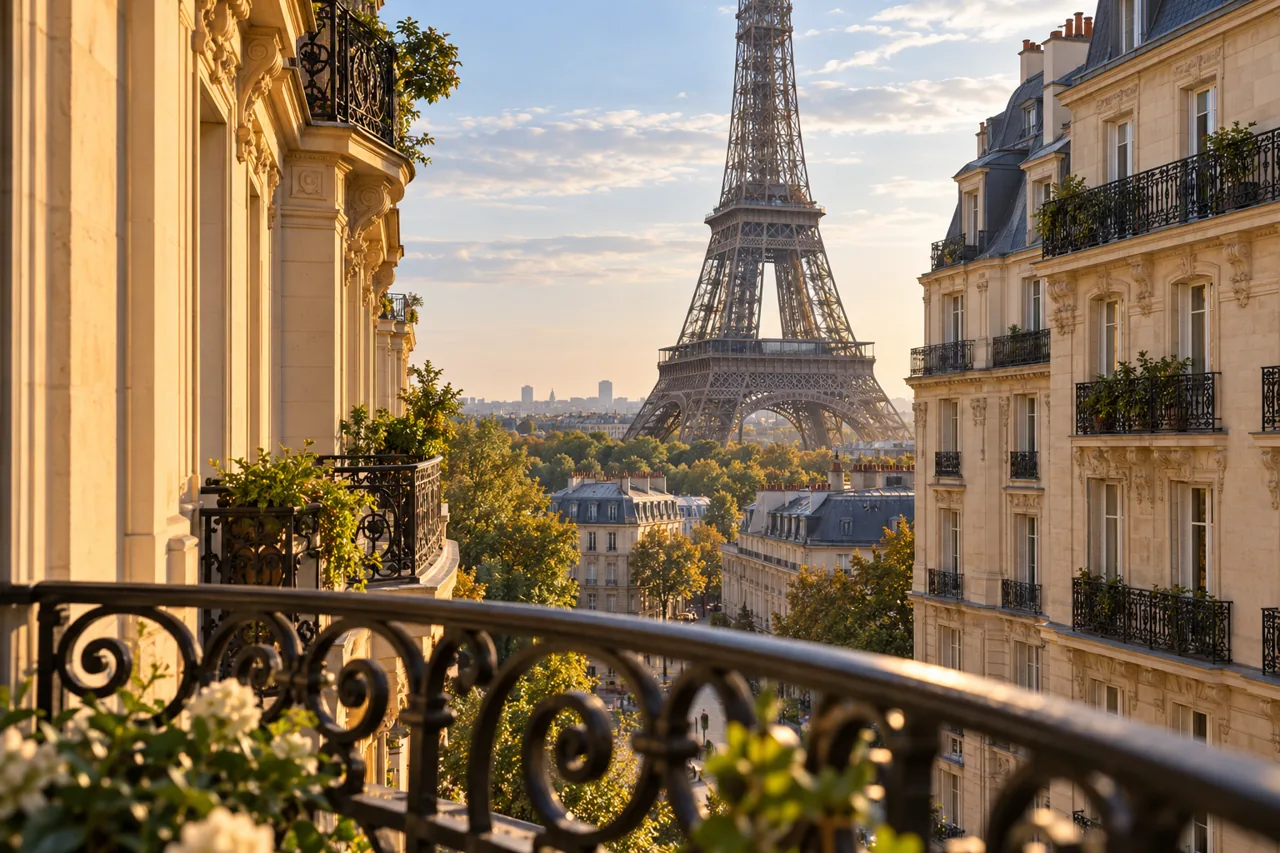
Let a familiar sight raise a new question
A landmark often arrives with an image already attached to it: the Eiffel Tower as a symbol of Paris, Versailles as royal magnificence, Notre-Dame as a medieval cathedral. Those images help travelers recognize a place, but they can also make the visit feel predetermined. Begin with a question that complicates the postcard. Who made the project possible? Why did the building matter to its contemporaries? What changed when later generations looked at it differently? The question should be specific enough to shape what happens during the visit. Asking why a monument became a symbol of Paris is more productive than promising that guests will discover its secrets. It creates room to examine ambition, reception, changing uses and the images through which a place became familiar. For a first-time visitor, this can accompany basic orientation; for an experienced traveler, it can challenge an interpretation acquired on earlier trips. Neither needs to abandon the pleasure of seeing an iconic place. Photographs, recognition and cultural understanding can coexist. The point is to give attention somewhere to go once the familiar view has been recognized, so that standing in front of the monument becomes the beginning of discovery rather than its conclusion.
Bring people back into the architecture
Buildings become more intelligible when visitors understand the people who commissioned, designed, used or imagined them. Gustave Eiffel opens a discussion about engineering and ambition, while the tower's story also requires recognition of his collaborators. Marie Antoinette provides a perspective on court life without explaining Versailles by herself. The aim is to bring a human scale to a monumental setting, while allowing the larger history to remain visible around the character. A human perspective works especially well when it reveals choices rather than merely recounting a life. A designer might illuminate a technical problem, a royal figure the demands of court life, or a writer the process through which a building enters cultural imagination. Yet famous names should not absorb the work of collaborators or explain every aspect of a setting. The Eiffel Tower's story involves Maurice Koechlin, Émile Nouguier and Stephen Sauvestre alongside Gustave Eiffel. That shared history offers a richer understanding than treating a landmark as one man's solitary creation. Similar care is useful elsewhere: the character supplies a viewpoint, while the interpretation makes clear what lies beyond it. Visitors gain both a person they can follow and a sense of the wider world in which that person acted.
Distinguish the person from the performance
Meeting a historical character through theater is a way of interpreting the past, rather than an encounter with an original witness. That distinction should be clear and can strengthen the experience. A performer gives voice to a perspective and invites the visitor into a narrative situation. Documented events, historical interpretation and dramatic invention still have different roles. When those roles are respected, imagination helps visitors engage with history without being asked to mistake a performance for evidence. This distinction also helps guests understand what they are being invited to do. They can explore a character's perspective, consider a decision and ask questions within the frame of a performed encounter. They do not have to accept every dramatic line as an independently verified historical statement. For sensitive subjects, the wider explanation should preserve the difference between established facts, interpretations and the narrative of the experience. That need not interrupt the atmosphere with constant qualifications. A clear initial frame and careful storytelling can establish the relationship between evidence and imagination. Advisors should describe the format accordingly, especially when combining it with another visit whose purpose is documentary or architectural. Guests can then appreciate the performance on its own terms and recognize how it contributes to their understanding.
Use fiction to explore a real monument
Notre-Dame offers a particularly rich meeting point between architecture and literature. Esmeralda is a fictional character from Victor Hugo's novel, whose imagined Paris gives the cathedral a powerful narrative presence. Following that literary perspective is different from taking a history of architecture tour. The two approaches can complement each other, provided the visitor understands which belongs to the novel and which concerns the monument's documented development and changing place in the city. Literature allows an additional distinction between the city in a novel and the city a traveler can observe today. Hugo published Notre-Dame de Paris in 1831 and placed its story in 1482; those dates matter because the book looks back at an imagined medieval world from a later moment. Esmeralda offers a way into that fictional world, while the actual cathedral has its own history before and after the novel. Hugo's contribution to awareness of architectural heritage can be discussed without claiming that he single-handedly saved the building. For visitors, comparing these layers is rewarding: a real monument helps make fiction tangible, and fiction reveals how a monument acquires meanings beyond its physical form. The encounter becomes a reading of place rather than a claim that its imagined characters once lived there.
Read the setting around the attraction
The surrounding streets can add context that an isolated landmark visit misses. Approaches, public spaces, neighboring buildings and views reveal how a monument participates in city life. A walk around the Arc de Triomphe can raise questions about power and memory; the area around Notre-Dame can connect literary imagination with the transformations of the Île de la Cité. The route should serve those questions instead of adding stops simply because they are nearby. A useful route identifies what is still visible, what has changed and what must be explained through context. An existing street or façade may retain a connection with the story while looking different from the environment known by the character. Visitors benefit from understanding that distance. The present city is evidence of development as well as continuity, not a preserved stage on which every period remains unchanged. Choose nearby stops because they reveal a meaningful relationship: an approach to the monument, a contrasting use of space or a setting that helps explain its reception. A map can establish proximity, but only interpretation establishes relevance. Keeping the route selective gives guests time to observe details and avoids turning the surroundings into a second checklist.
Give the visitor an active point of view
A new way of looking does not require a complicated game or constant participation. It can begin with a comparison, a decision or a question posed by the character. Would the visitor have supported the project? How might someone living in that setting have experienced it? Such prompts help travelers reconsider familiar images. They work best when they deepen observation and allow guests to respond at their own pace, rather than prescribing an emotion. An active point of view can also accommodate different levels of knowledge. One guest might notice the scale or decoration of a structure; another might ask about the institutions or ambitions behind it. A well-framed question allows both responses to contribute. It should not require visitors to agree with the character, admire every historical decision or perform a role that makes them uncomfortable. This is particularly relevant when a monument connects with political power or public memory. The opportunity lies in examining the relationship between representation and lived experience, rather than applauding a grand narrative. Families and private groups can find common ground in looking at the same detail and discussing what each person sees. The conversation gives the place personal significance while leaving its complexity intact.
Combine complementary forms of discovery
A character-led encounter need not replace a monument visit. For guests interested in architecture, interiors or collections, a guided visit can provide knowledge that an outdoor performance approaches differently. Treat those experiences as separate parts of a coherent day and confirm access arrangements independently. Their value comes from the relationship between them: one may establish the setting, while the other opens a human or literary perspective that continues the conversation after the visit. For itinerary planning, separate the cultural relationship from the commercial arrangements. A performance near a landmark does not imply interior access, timed admission or inclusion of a specialist guide. Confirm each component with the relevant provider and allow for its own meeting arrangements and practical requirements. Then decide which order supports understanding: an introduction may prepare guests for a monument visit, while an encounter afterward may help them revisit what they have just seen. There is no universal sequence. The best order depends on the guest's existing knowledge, preferred rhythm and main interest. If the day becomes crowded, keep the component that most directly serves that interest rather than assuming that every available activity must be added to make the landmark worthwhile.
Choose depth according to the guest's interests
A first-time visitor may want recognizable sights with an engaging introduction, while a returning traveler may prefer a more demanding question. Families can benefit from a narrative that gives different generations something to notice and discuss. For travel advisors, the choice should follow the guest profile rather than a promise that every landmark can be made surprising in the same way. Paris's famous characters offer several routes into its monuments; the right route is the one that makes the place matter to these travelers. The guest's interests can be expressed as a question for the day: how engineering becomes a symbol, how fiction changes a monument's reputation or how a public space communicates power. That question gives the advisor a useful way to connect activities and explain the itinerary without promising access or discoveries that have not been confirmed. Paris's literary perspectives offer another route for guests drawn to writing and imagination. For those who prefer physical observation, the same principle can center architecture, urban space or a collection. A landmark remains essential because it supports the chosen theme, rather than because it must appear on every itinerary. Returning to an iconic place with a clear cultural purpose can therefore feel entirely appropriate, even when the guests have photographed it many times before.
FOR YOUR GUEST ITINERARIES
Designing a Paris itinerary around its great landmarks? Elyrea can help you connect the places your guests want to see with character-led cultural experiences suited to their interests.
Discuss your itinerary