
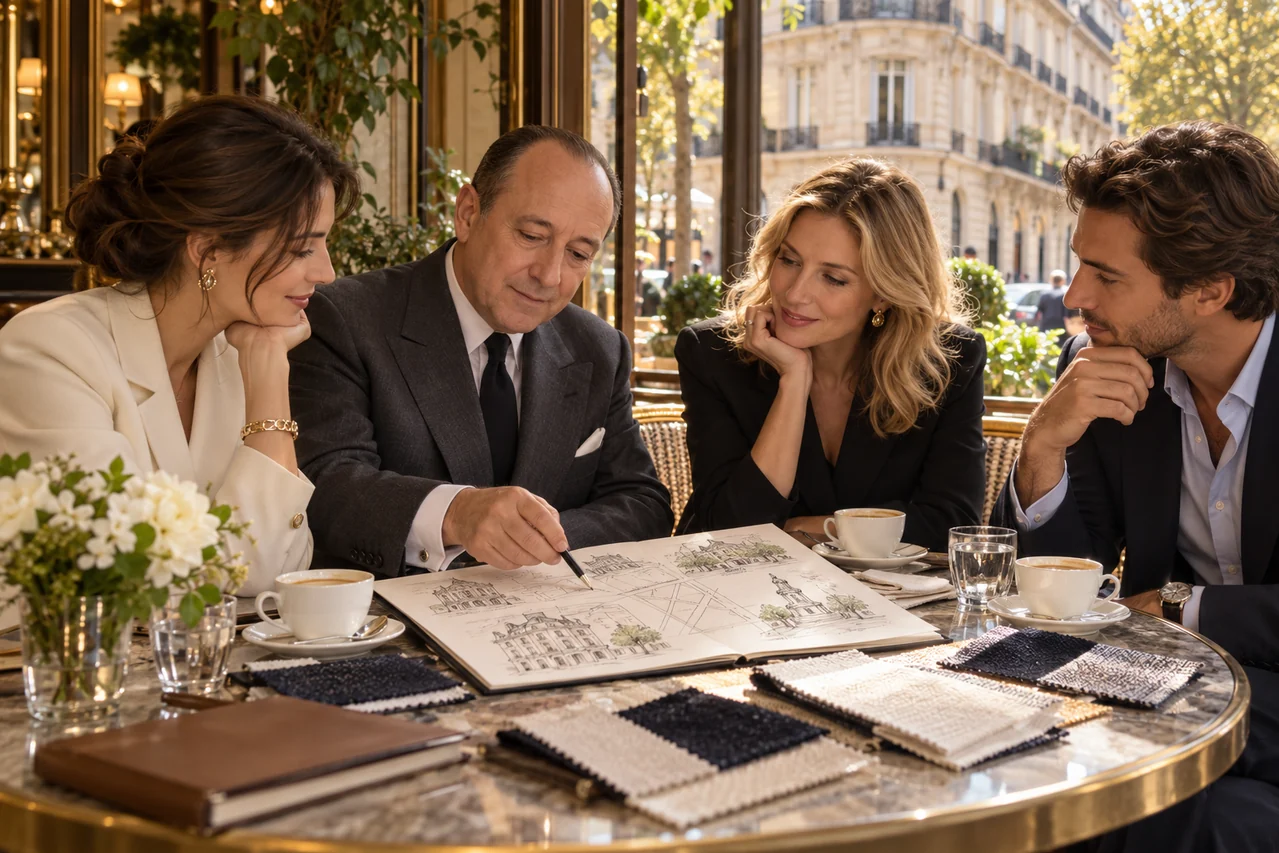
Qualify the interest before choosing the stops
A fashion professional, an enthusiastic teenager, a collector and a guest seeking purchases will not want the same day. Ask what they admire, what they already understand and how much technical discussion they enjoy. That information determines the purpose of a museum visit or encounter as much as budget determines logistics. It also exposes mixed interests within a group: one person may know silhouettes well while another is drawn to history. A clear shared question can connect them. For example, understanding how an idea becomes a Parisian fashion phenomenon opens room for design, craft and culture without requiring identical expertise.
Give the day a question it can answer
Dior's 1947 debut offers a strong narrative starting point: how did a new house make a collection into an international event? The question connects biography, the postwar city, clothing construction and media. It can guide the selection of stops so that each contributes something different. The New Look's impact supplies preparation for guests who want the historical background. The day does not need to remain exclusively about one collection, but it benefits from a recognizable line of inquiry. Without that line, several impressive venues can remain separate appointments, with no clear reason for having placed them together.
Position the encounter where it adds most
La mode selon Dior can introduce the historical character before guests examine objects, or help them interpret what they have already seen. The choice depends on their familiarity and attention pattern. An introduction may make later garments more readable; an encounter after a display can draw on questions guests bring from it. The experience's purpose should be explained accurately as a cultural encounter with the figure of Christian Dior, rather than a promise of access to the contemporary Maison. Its value lies in placing a person, a setting and creative choices in conversation, giving the broader itinerary a human thread.
Use the neighborhood to explain an ecosystem
Avenue Montaigne can reveal the geography of couture, but naming successive brands does little to explain how the industry works. A meaningful walk connects the founding address, the idea of a house and the wider concentration of skills and clients. The street is then a cultural setting rather than a shopping checklist. Why Paris became a couture capital develops the broader background. The advisor should still keep the content selective: a short, well-focused interpretation of place may serve the itinerary better than a lengthy walk that repeats the same points at every facade.
Choose a collection or exhibition that advances the theme
The Galerie Dior, Palais Galliera and the Musée des Arts Décoratifs can be relevant, depending on the actual content and arrangements during the guest's trip. The advisor needs to verify those details rather than assume a particular exhibition will remain available. Selection should begin with the role of the visit: introduce the founder, compare a period, or examine a technique. For a knowledgeable guest, an apparently smaller focus may be more valuable than a broad visual survey. A museum is not automatically the cultural center of a fashion day simply because it is prestigious. It earns its place by helping the guest answer the chosen question.
Introduce making without promising unavailable access
Craft adds substance to a premium itinerary because it exposes the time and judgment behind a finished object. A separately arranged artisan or workshop visit may contribute when genuinely possible, but cultural value does not require a claim of special access. Displays and an explanation of atelier work can also reveal construction, fitting and specialist skills. Any commercial access arrangement should be confirmed on its own terms. This protects the coherence of the day: the advisor can distinguish what the guest will understand from where the guest will enter, instead of allowing an appealing but uncertain promise to carry the proposal.
Allow comparison and rest to improve the rhythm
Chanel may create a second chapter for a guest interested in different approaches to elegance. Her encounter ends at place Vendôme, in front of the Vendôme Column, and should be planned with its own content and travel time. Adding it is worthwhile only if the guest has the appetite for another substantial perspective. Visual attention can tire after repeated collections and displays, so lunch, transfers and space to talk should count as parts of the experience. A premium day should leave guests able to notice and enjoy differences. Relentless density can make carefully chosen cultural material harder, rather than easier, to absorb.
Let optional shopping follow understanding
Shopping can conclude the day when it matches the guest's wishes, but it need not become the organizing principle. After a biography, a collection and an account of craft, a garment can be recognized through codes and decisions rather than its label alone. Guests who prefer no purchases should still feel the day is complete. The advisor's role is to connect culture, logistics and personal interest into a clear progression. A Dior enthusiast's Paris itinerary offers a narrower version of that approach. The success of the day is measured by what the guest understands and remembers, not by how many luxury addresses appear on the schedule.
FOR YOUR GUEST ITINERARIES
Preparing a couture-themed day for a private group or premium itinerary? Share your guests' interests with Elyrea so our team can help position La mode selon Dior within the cultural progression of their visit.
Discuss your itinerary