
Begin with the world of performance
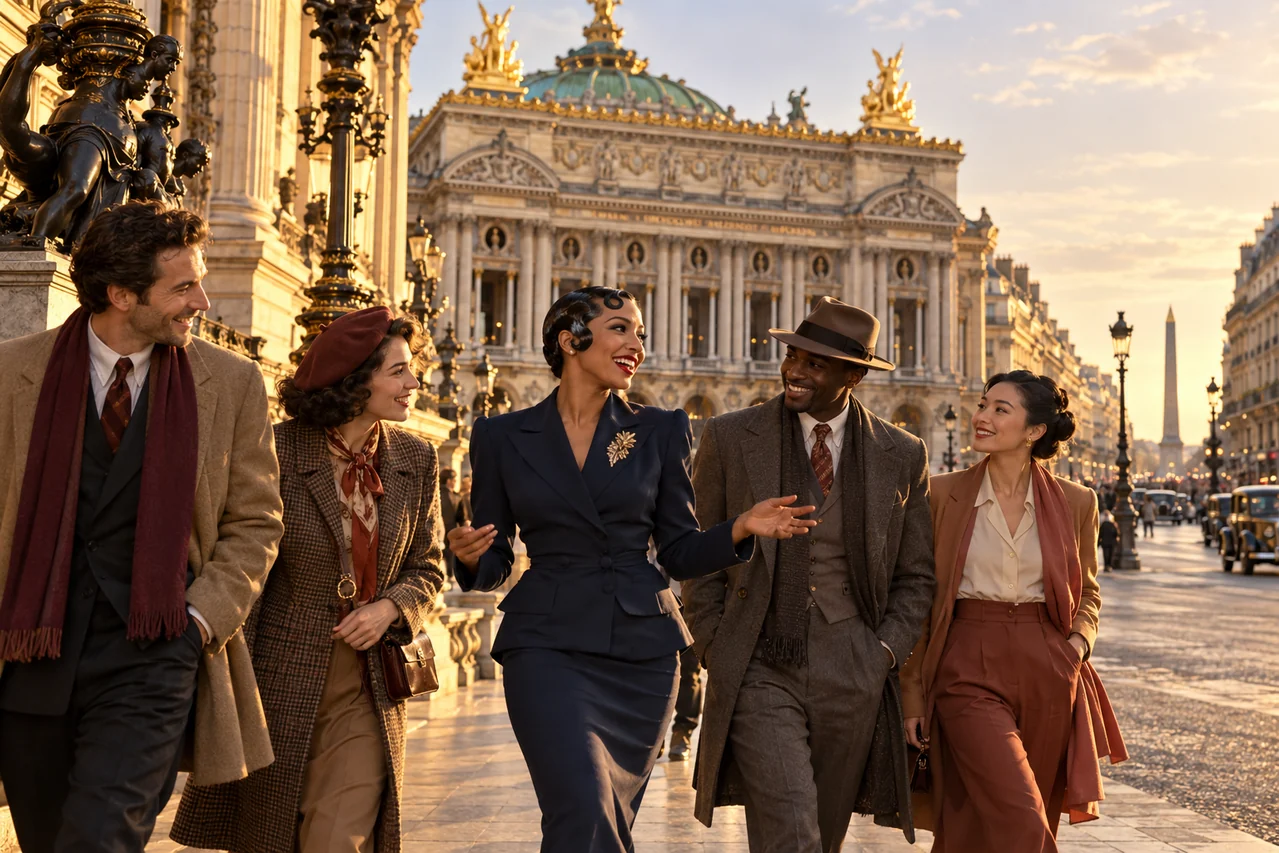
The Palais Garnier provides an immediately legible point of orientation in a district associated with entertainment and society. It can introduce the public world in which a celebrated performer moved without implying that Baker's career unfolded at every building in view. This is the first discipline of a character-led route: a location may illuminate a social environment even when it is not a documented personal address. Explaining that role strengthens rather than diminishes the walk.
Use fame to discuss international connections
Baker's position as an international star helps visitors understand how performance could connect an individual with influential social networks. That theme belongs naturally in central Paris, where entertainment, hotels and public display sit close together. It also prepares the later wartime account. A career is not merely background before the important history begins; it helps explain the contacts and mobility that could become resources when the political situation changed.
Place Vendôme holds several histories at once
The square is familiar as an emblem of luxury, but that contemporary identity need not dominate the interpretation. Its buildings and nearby hotels can help introduce the geography of power during the Occupation. The point is not to declare that elegance concealed a single secret history. It is to show how the same urban space can carry different functions across time. Baker supplies a narrative thread through that layered city, not ownership of every story within it.
Moving toward Concorde changes the scale
Place de la Concorde broadens the view from a relatively enclosed square to a major urban space. The transition can help visitors think about how power presents itself through streets, vistas and monuments. Concorde also carries histories outside Baker's lifetime, which should remain distinct from her twentieth-century narrative. A good route acknowledges those layers without allowing every visible monument to pull the day into an unrelated chronological digression.
Walking makes relationships visible
A map records positions; walking reveals their proximity and the changes in atmosphere between them. Guests can notice how quickly they move from performance to hotels, from enclosed spaces to ceremonial vistas. Those observations provide material for a conversation about the city rather than only a sequence of anecdotes. They also allow a measured pace: the strength of this route comes from connecting nearby places, not from maximizing the distance covered.
Draw a clear line around biographical claims
The route should never invent a Baker meeting, residence or intelligence operation merely because a location is useful dramatically. Her documented wartime activity extended beyond Paris, and the city walk supplies contextual geography. The broader account of Baker and occupied Paris explains this distinction. Travelers can understand theatrical interpretation perfectly well when it is stated clearly; unnecessary precision is more damaging to credibility than an honest description of the narrative device.
Let the Encounter add a voice to the geography
The walk gives a spatial framework, while Josephine Baker’s Paris & the Occupation brings personality and interaction to the subject. The two functions can reinforce one another. Questions about belonging, influence and wartime decisions feel more concrete after guests have observed the surroundings. For guests comparing formats, a historical guide and a Baker-led experience offer different strengths that can be combined rather than presented as competing measures of quality.
Keep the program proportionate to the guest
Central accommodation may make this subject convenient to integrate, but practical suitability still depends on mobility, interests and the rest of the day. Advisors should decide whether the walk is an introduction, a focused deepening or part of a wider historical program. A meal or independent time afterward can give the experience room to settle. The result should be a clear narrative journey, with enough breathing space to preserve attention and conversation.
FOR YOUR GUEST ITINERARIES
For centrally based guests interested in twentieth-century Paris, Elyrea can help you integrate a Josephine Baker cultural encounter into a coherent walking itinerary.
Discuss your itinerary