
Meet the woman before the label
Barbe-Nicole Ponsardin was born in Reims in 1777 and became a widow at twenty-seven after François Clicquot died in 1805. The word on the bottle describes a personal circumstance before it describes a globally recognizable business. Continuing the family activity was a decision, not an inevitable step toward success. Understanding the woman known as Madame Clicquot gives the tasting a human center and prevents brand recognition from taking the place of historical understanding.
Why history changes what you taste
Color, aroma, texture and freshness are useful starting points, but they cannot explain how champagne became an international cultural symbol. History adds questions about production, transport and consumer expectations. What made clear wine commercially important? How could bottles reach foreign markets during European wars? Why did reputation matter so much? These questions do not replace sensory attention. They give it a framework, allowing a traveler to connect what is in the glass with the work that made it possible.
Clarity is an achievement
A transparent glass of champagne looks unremarkable to a modern drinker. Earlier producers had to deal with sediment left by fermentation in the bottle. Riddling gathers that sediment toward the neck so it can subsequently be removed through disgorgement. Madame Clicquot and her house are associated with developing and improving this process. That connection turns a technical explanation into an observable result: the clarity in the glass reflects a practical problem solved through work and experimentation.
A French wine with an international story
The business developed in a Europe disrupted by the Napoleonic wars, when access to markets and the movement of goods were uncertain. The Russian market became particularly important in the house's commercial history. Rather than presenting champagne's prestige as something France simply possessed, this story shows how reputation was negotiated abroad. Producers needed distribution, customers and trust as well as an appealing wine. The tasting therefore opens a discussion of French culture shaped through international relationships.
A conversation rather than an examination
Guests do not need a trained palate to participate thoughtfully. One person may notice freshness, another texture, and another may be drawn to the business decisions behind the product. A narrative encounter can accommodate those different ways of entering the subject without turning recognition of aromas into a competition. For experienced wine travelers, historical context offers another layer. For beginners, the person and story provide an accessible route into a subject that can otherwise feel intimidating.
What makes the Encounter different
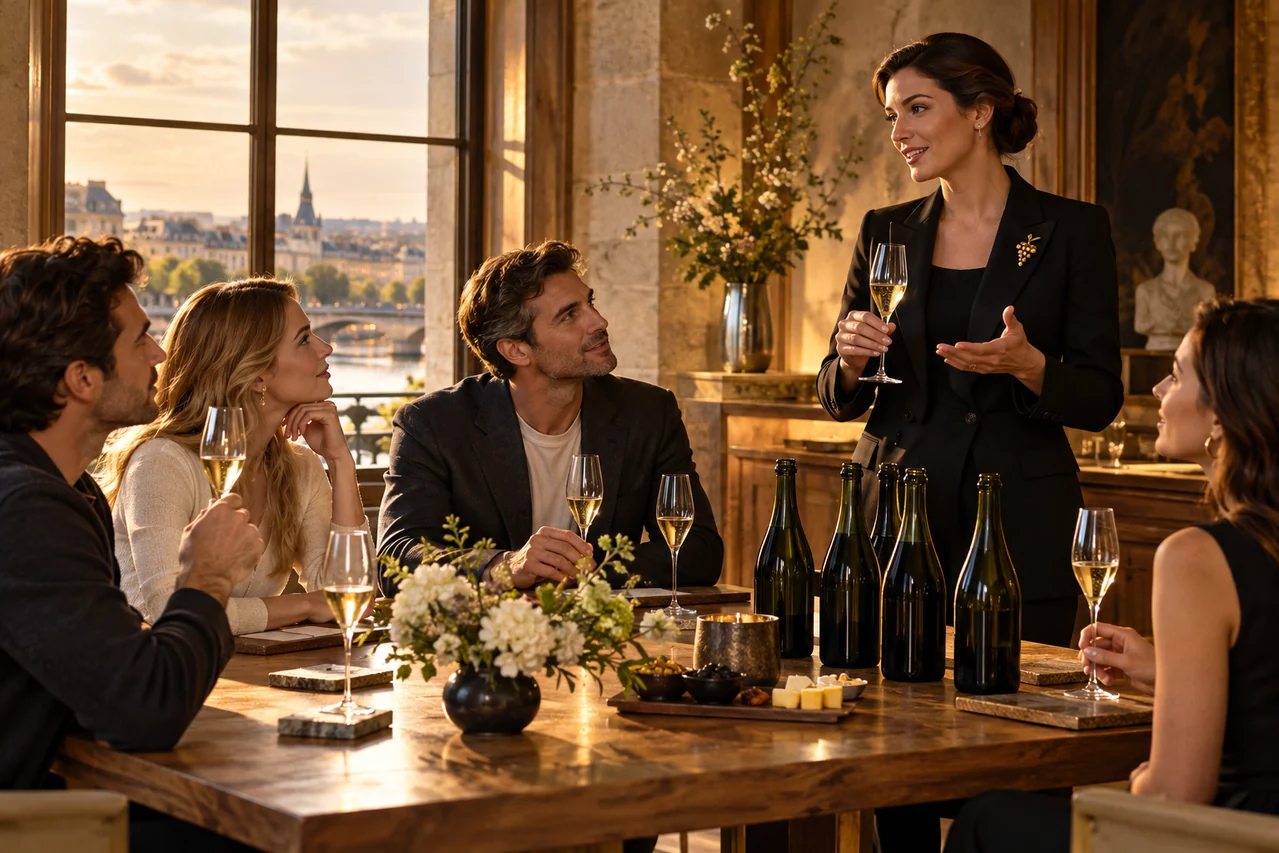
An Elyrea Encounter brings a historical figure into a setting connected with the story and invites interaction through performance. It is not a claim that a dramatized conversation is an archival record. The distinction matters: verified history establishes the context, while theatrical interpretation gives participants a way to engage with it. The result is a tasting organized around a person, a place and questions, rather than a generic explanation delivered beside an impressive bottle.
Give the experience room in the itinerary
A tasting benefits from unhurried time before and after it. Scheduling it between tightly timed monuments risks reducing it to another appointment. A meal can extend the cultural conversation, while a later Champagne excursion can reveal landscapes and production settings behind the story. Advisors should confirm practical arrangements with Elyrea rather than infer the venue, wines or service from the article. The value lies in a coherent sequence suited to the guest's interests, not the largest number of stops.
Carry the story into Champagne
Paris can introduce the human story before guests explore the region, or the Encounter can follow a regional visit and bring technical observations back to a memorable individual. Travelers interested in enterprise can continue with Clicquot's approach to building a business; those interested in sensory understanding can explore how to taste champagne thoughtfully. These are different questions within the same journey, allowing the wine to connect personal history, material knowledge and the wider landscape of French culture.
FOR YOUR GUEST ITINERARIES
Planning a Paris stay for guests interested in wine, French culture or business history? Ask Elyrea how A Tasting with Veuve Clicquot can become a distinctive chapter in their itinerary.
Discuss your itinerary