
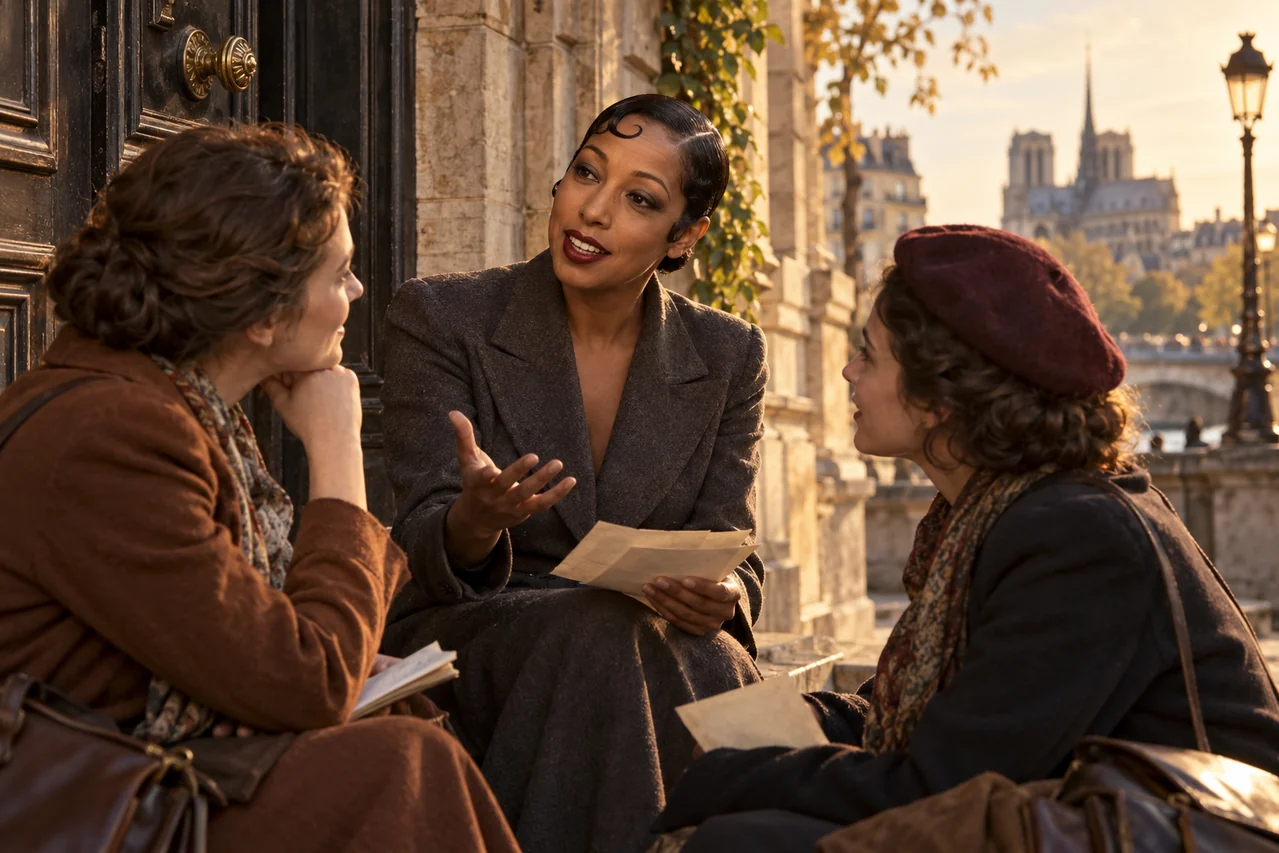
Expand the picture beyond armed action
Popular images of resistance often emphasize sabotage, combat and male leadership. Those images represent important activities but leave many others harder to recognize. Collecting information, carrying messages, providing shelter and sustaining clandestine work were also forms of action. Introducing that range helps visitors understand why a history of the Resistance cannot be organized only around battles. It also creates room to consider people whose work required discretion rather than public visibility.
Visibility could become a contradiction
In some circumstances, expectations about women's ordinary activities helped individuals attract less attention. That operational discretion could contribute to their later absence from simplified historical accounts. This is not a universal explanation for every woman or every network, but it is a useful question to examine. The work needed to remain unseen at the time may also be work that is more difficult to recognize afterward through photographs, monuments or dramatic anecdotes.
Baker was an exceptional case
Baker's public celebrity contrasts sharply with the idea of an anonymous courier. Her international career made travel and influential acquaintances part of her recognizable identity. That visibility could become a resource for intelligence activities, while also carrying risks. Beginning with this paradox prevents the article from proposing a single profile of a woman in resistance. A famous performer and a less publicly known participant might contribute through very different circumstances and connections.
Intelligence belongs within the history of action
A valuable account explains why learning and transmitting information mattered. The work may be less visually dramatic than armed confrontation, yet its consequences could be significant. Baker's wartime contribution demonstrates this point without requiring an invented operation. It also directs attention toward relationships: information does not move from one person to a strategic decision by magic. Considering the network makes space for other participants rather than placing all agency in the most famous figure.
Acknowledge risk without exploiting it
Resistance work carried threats of arrest and severe punishment. Discussing those dangers is necessary, but an encounter need not dwell on violence to prove its seriousness. Women could also face particular prejudices and vulnerabilities, which deserve careful contextual treatment. Respectful interpretation neither turns suffering into spectacle nor treats courage as effortless. The guest should understand the stakes while retaining a sense of the people involved as individuals with lives beyond their wartime contribution.
Ask how remembrance selects its figures
Who appears in a textbook, receives a decoration or gives a name to a street? Such questions help travelers see that historical visibility is shaped after events as well as during them. Baker's recognition can lead to a discussion of how society remembers less famous contributors. Her own resistance story provides the individual grounding for this broader reflection. It should open curiosity about others, rather than imply that one celebrated woman encompasses the whole subject.
Link women's lives without flattening differences
A journey might also consider Jeanne d'Arc, Veuve Clicquot or Marie-Antoinette, but their lives belong to different periods and structures of power. Calling all of them simply strong women obscures those distinctions. The useful thread concerns the possibilities and constraints facing a particular individual in a particular society. Exploring women's historical destinies can help an advisor build connections that preserve difference while giving the guest a coherent theme.
Plan for social history as well as military history
This angle can suit travelers interested in civic responsibility, women’s contributions or the lives behind wartime institutions. It should not be assigned automatically on the basis of the guest's gender. A Baker Encounter can introduce the theme, with a museum or other historical resource widening the frame. The program becomes richer when it balances an embodied individual story with the understanding that many people, often less visible, contributed through different forms of work.
FOR YOUR GUEST ITINERARIES
For guests interested in women's history or the social dimensions of the Second World War, Elyrea can help build a focused itinerary around a Josephine Baker Encounter.
Discuss your itinerary