
The short answer is no
Marie Antoinette did not buy the celebrated necklace and played no role in the 1785 fraud. The Palace of Versailles describes her as the affair’s victim. Her name nevertheless gave the scandal its force. Public criticism had already centered on her spending, so a supposed secret purchase appeared to fit a character created by pamphlets. Like the doubtful brioche quotation, the story endured because it seemed to confirm an existing reputation.
A jewel designed for Madame du Barry
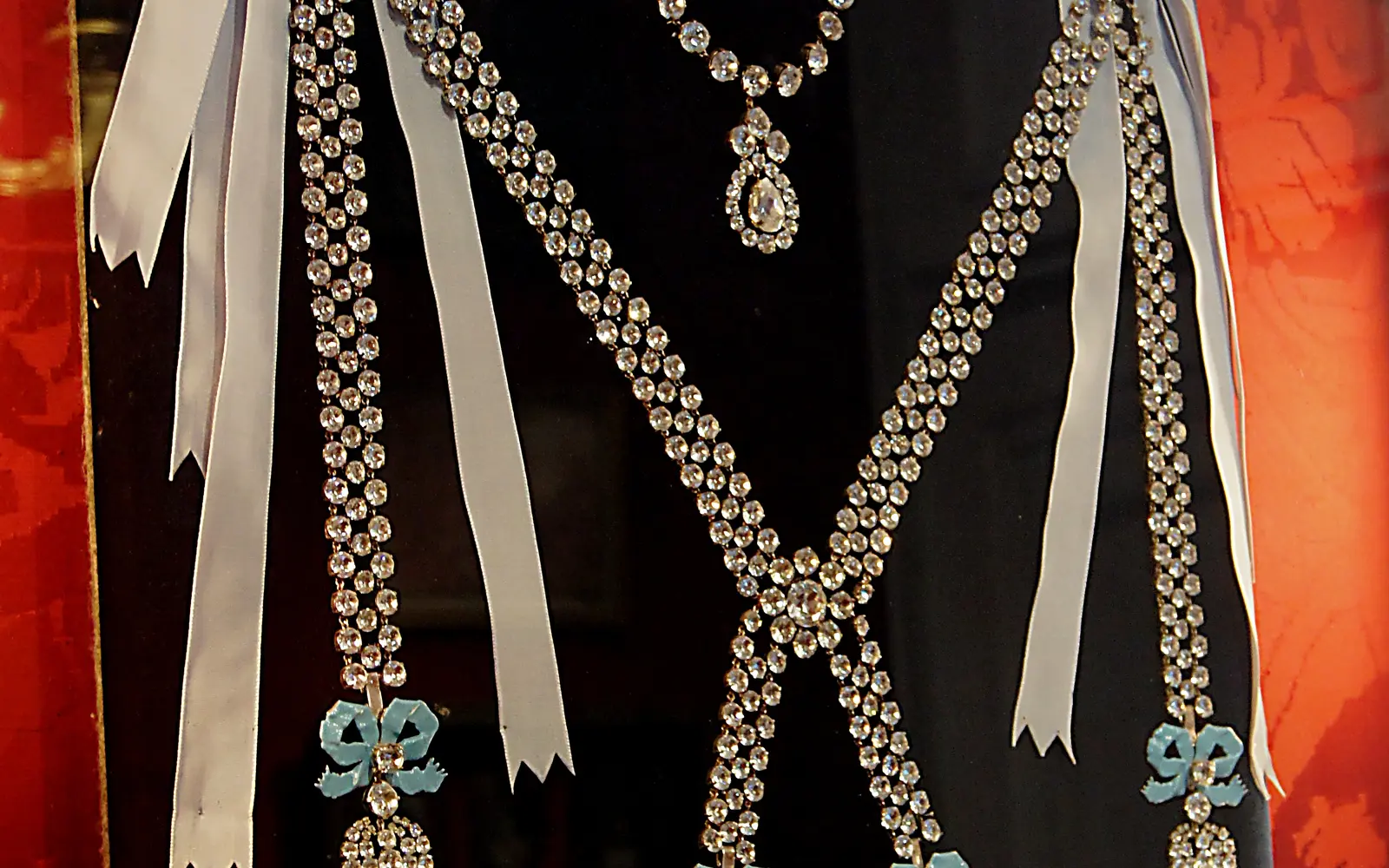
Jewelers Böhmer and Bassenge had assembled an extraordinary suite of diamonds, initially intended for Madame du Barry during Louis XV’s reign. The king’s death removed that purchaser and left a costly piece without an obvious buyer. Marie Antoinette refused the necklace. This origin matters: it was not her commission. Its value, history and the jewelers’ commercial urgency nevertheless created conditions in which a fraudulent negotiation could be made to look believable.
Jeanne de La Motte manufactures access to the queen
Jeanne de La Motte presented herself as an intermediary close to Marie Antoinette. She persuaded Cardinal de Rohan, who wanted to recover royal favor, that he could secretly assist the queen. Forged letters and a nocturnal meeting with a woman resembling the sovereign sustained the illusion. The fraud therefore depended on more than one false document. Ambition, credulity and courtly codes combined, with each participant accepting signs that promised the access or reconciliation he wanted.
The cardinal believes he is buying for Marie Antoinette
Rohan negotiated with the jewelers while believing he acted for the queen. The necklace was delivered, dismantled and its diamonds dispersed for sale. When payments failed, the jewelers approached the court and learned that Marie Antoinette knew nothing about the transaction. This mechanism explains why calling it the queen’s purchase is wrong. Her identity functioned as imaginary security in a deal from which she received neither the jewel nor any benefit.
A public arrest makes the scandal larger
Louis XVI ordered Rohan arrested at Versailles on August 15, 1785, before the court assembled for the Feast of the Assumption. The gesture asserted that royal honor required a response, but it also made the affair spectacular. A public trial before the Parlement of Paris exposed the deception to an eager audience. Rohan’s choice to seek judgment, rather than accept internal court discipline, helped turn a criminal fraud into a crisis of monarchical reputation.
Innocent, yet defeated in public opinion
Rohan’s 1786 acquittal was received as a rebuke to the queen, although it did not establish any participation by her. Jeanne de La Motte was convicted, branded and imprisoned before escaping. Marie Antoinette remained legally outside the fraud but politically damaged. Versailles notes that pamphlets and caricatures intensified after the affair. Court dress as political language helps explain why appearance, consumption and authority were already entangled in the queen’s public image.
What the reconstruction can and cannot show
The photograph depicts a modern reconstruction displayed at the Château de Breteuil, not the lost original after it was dismantled. Stating that limit prevents an image from becoming false material proof. The photograph was released into the public domain by its creator, Jebulon, and still helps viewers understand the intended scale and brilliance of the piece. The editorial crop does not alter its status as a reconstruction or the identity of the photographed object.
B2B guidance: begin with reputation
For international advisors, the affair connects jewelry, court ceremony, justice and public opinion without promising access to an original object. Ask why a scandal involving an innocent queen could damage her more than the fraudsters. The Elyrea Marie Antoinette Encounter can extend that question about public image and life at Versailles, subject to separately confirmed availability. The story then becomes an inquiry into credibility rather than a luxury anecdote detached from political context.
FOR YOUR GUEST ITINERARIES
With Elyrea, examine how fraud, trial and public opinion fixed an enduring image of Marie Antoinette.
Discuss your itinerary