
Taking the beach was not enough
On June 6, 1944, the immediate task was to establish a lodgment. An army, however, could not advance on the men and vehicles landed during the assault alone. Fuel, ammunition, food, replacements and equipment had to follow while France’s major ports remained beyond reach or heavily defended. Mulberry A addressed that gap by creating an offshore unloading system at Omaha before the Allies could capture and operate a deep-water port.
There were two Mulberries, not one harbor
The Allies assembled two artificial harbors. Mulberry A served the American sector off Omaha Beach; Mulberry B stood off Arromanches in the British sector. Similar names conceal different locations and outcomes. Collapsing them into one harbor obscures the geography of D-Day logistics. The distinction between Overlord and Neptune likewise separates the wider campaign, the naval operation and the systems that sustained both.
A port crossed the Channel in components
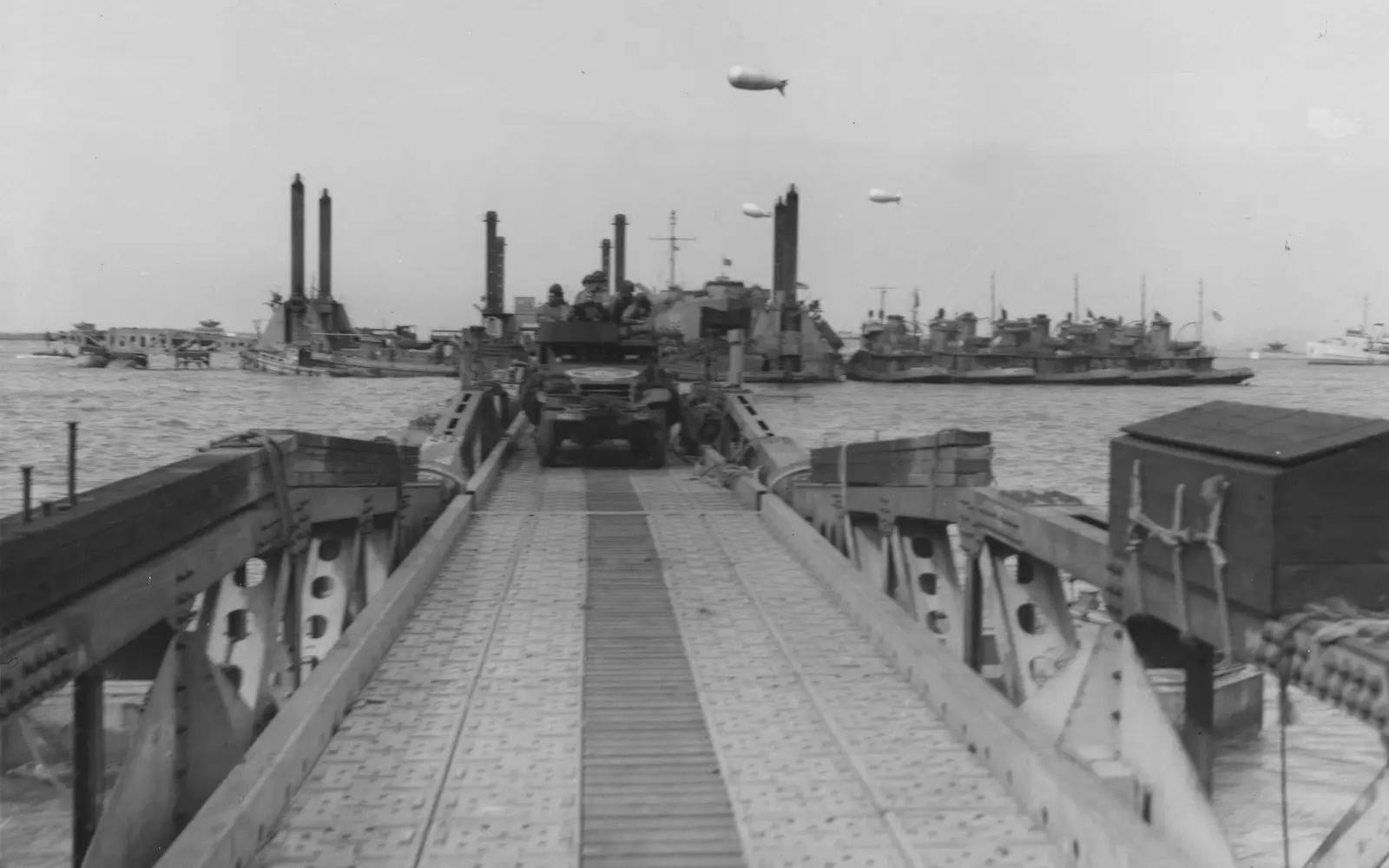
The system combined breakwaters, concrete caissons, deliberately sunk ships, pierheads and floating roadways connected to shore. Prefabricated components crossed the Channel and were positioned along the Normandy coast. The architecture solved a basic problem: tides shifted the waterline while vessels and trucks required a continuous connection. Flexible roadways rose and fell with the sea while carrying men, vehicles and supplies.
By June 16, vehicles were rolling toward shore
A U.S. Army Signal Corps photograph shows vehicles using a floating causeway on June 16, 1944. Ten days after the assault, Omaha was no longer only a battlefield; it had become an organized transit space. The image documents logistics in motion, but it should not create an impression of a complete, invulnerable system. Mulberry A had been operational for only a matter of days.
The storm exposed the system’s vulnerability
A severe storm struck during the night of June 19–20 and continued through June 22. Imperial War Museums notes that the Mulberry harbors had been working for only days. The American installation was damaged so badly that it was abandoned. The more sheltered British harbor was repaired and remained in use. Environmental exposure thus forced a logistical decision as consequential as many tactical choices ashore.
One technical failure did not end American supply
Mulberry A’s loss did not halt American operations. Direct unloading across the beaches continued as procedures adapted and efficiency improved. Salvageable components from the American harbor could also reinforce the British installation. The episode rewards careful language: a specific infrastructure failed, while the broader supply system relied on redundancy, improvisation and sustained work across open beaches.
Omaha after the assault was a transformed landscape
Accounts of Omaha often concentrate on the first hours of June 6. Mulberry A redirects attention offshore and into the following weeks. Reading Omaha’s terrain also means reading tides, swell, access routes and vehicle circulation. Military success now depended on engineers, sailors, drivers and beach parties as surely as it had depended on assault formations.
B2B guidance: present the beach as a system
For international advisors, ask guests what must happen after a successful first day. A photograph of a floating roadway opens a conversation about flow and maintenance rather than combat alone. The Elyrea Omaha Beach Encounter can place those decisions within the Normandy landscape, subject to separately confirmed availability. The itinerary can then connect remembrance, engineering and environmental vulnerability.
FOR YOUR GUEST ITINERARIES
With Elyrea, read Omaha Beach as a logistical challenge that continued long after the June 6 assault.
Discuss your itinerary