
The region comes before the image
Champagne is rooted in a particular French territory, even when a bottle is opened far from it. Soil, climate, vines and accumulated production knowledge matter before any global imagery of celebration. That geographical connection offers a useful starting point for travelers who know champagne mainly through brands. A regional visit can reveal landscapes behind a familiar product, while a Paris experience can introduce the people and historical questions that make those landscapes more legible.
Reims connects wine and ceremonial history
Reims and its cathedral occupy an important place in the history of French royal coronations. That heritage can enrich a cultural itinerary in Champagne, placing wine near a wider history of ceremony and authority. It would be too simple to claim that royal associations alone explain the drink's modern prestige. They belong to a layered symbolic environment rather than a single cause. Travelers gain more from seeing how heritage, production and later consumer habits interact than from a neat origin myth.
The wine brings its own ceremony
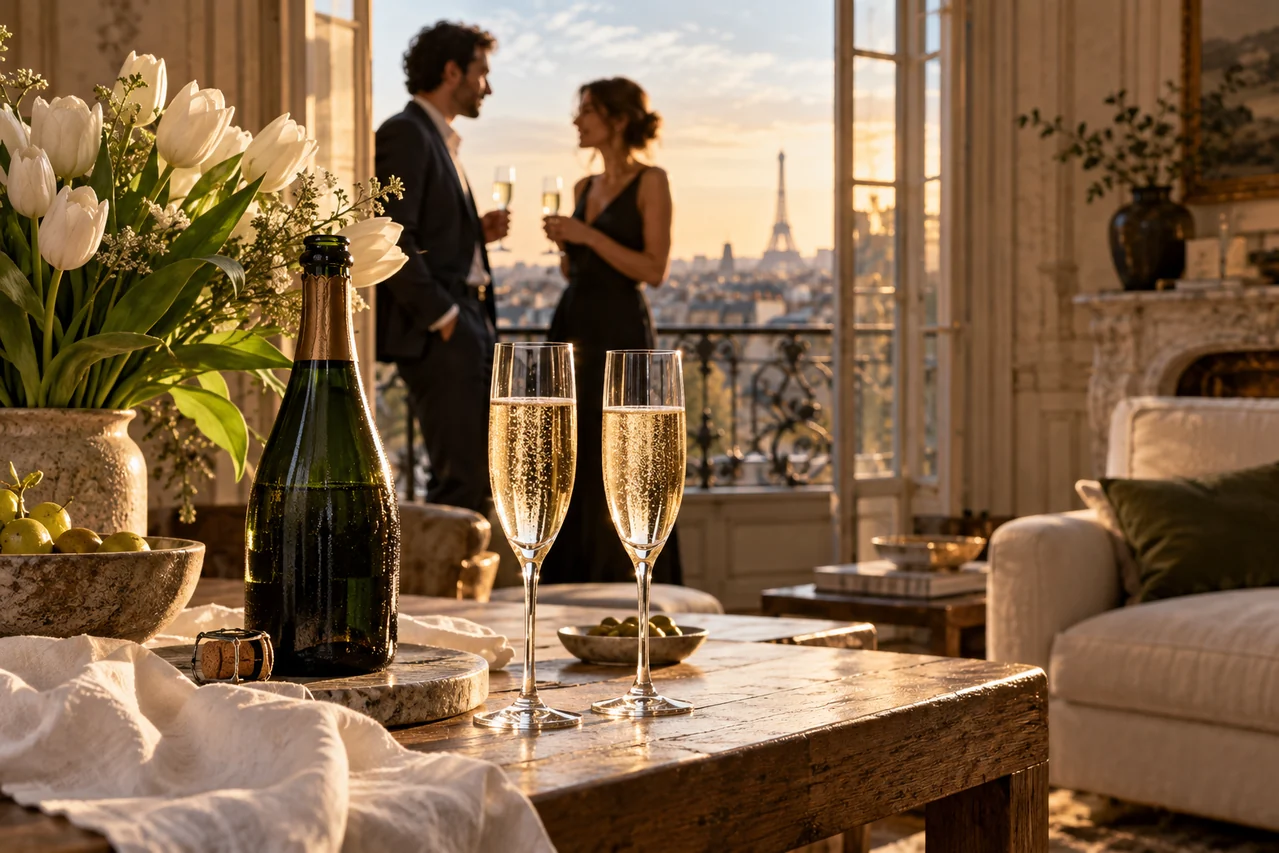
Opening champagne has a visible and audible presence: the bottle, the sound, the foam and the movement of bubbles can mark a transition between ordinary time and a special occasion. This sensory character helps explain its role in celebration. Ritual is therefore not solely imposed by advertising; the product lends itself to a shared moment. Yet the same wine can reward quiet attention at a meal or tasting, where its qualities are considered beyond the excitement of a toast.
Technical work supports perceived value
Production involves time, skill and difficult material processes. The history of riddling, associated with Madame Clicquot and her house, illustrates the effort needed to handle sediment and produce clear wine. Clicquot's contribution to champagne gives specificity to the otherwise vague phrase craftsmanship. Cultural prestige becomes more convincing when linked with real work rather than simply asserted. Expensive presentation cannot explain on its own why a product develops a durable reputation for quality.
Foreign markets helped create French prestige
Champagne's international standing emerged partly through consumers and commercial relationships outside France. The Russian market in the Clicquot story shows how producers sought influential audiences and negotiated access in uncertain conditions. French luxury was therefore built through exchange, not just exported after its identity was already complete. This transnational perspective is especially meaningful for international travelers: their own countries' habits may be part of the history of how a French wine became a recognized symbol.
A name makes the product memorable
Champagne houses connect a product with names, stories and recognizable identities. Veuve Clicquot is a particularly clear example because the name preserves a woman's personal status while carrying a commercial reputation. Remembering Madame Clicquot's biography brings that identity back to a human scale. A label can support recognition, but it should not conceal differences between producers, historical contexts or styles. Cultural understanding allows guests to appreciate brand narratives while remaining curious about what stands behind them.
Luxury also depends on use
The same bottle can function as a gift, a celebration, a meal companion or an object of technical interest. Its cultural meaning shifts with the occasion and the people sharing it. A travel itinerary can explore those uses without ranking them by price. A thoughtful tasting gives time for observation and discussion; a meal introduces another context. The aim is to understand why champagne occupies several kinds of social space, rather than assume the most expensive expression is automatically the most meaningful.
Build a journey around those layers
An advisor can connect a narrative encounter in Paris with Champagne's geography, history and production, or compare wine with fashion as another expression of French reputation. Chanel and Clicquot's different paths to iconic status provide a useful bridge without collapsing two industries into a single story. The resulting itinerary has a clear question: how does skill become cultural value? Guests can carry that question from the tasting table to monuments, landscapes and other forms of French creation.
FOR YOUR GUEST ITINERARIES
Planning a cultural journey around French luxury? Elyrea can help connect a Veuve Clicquot Encounter with the history, places and craftsmanship that interest your guests.
Discuss your itinerary