
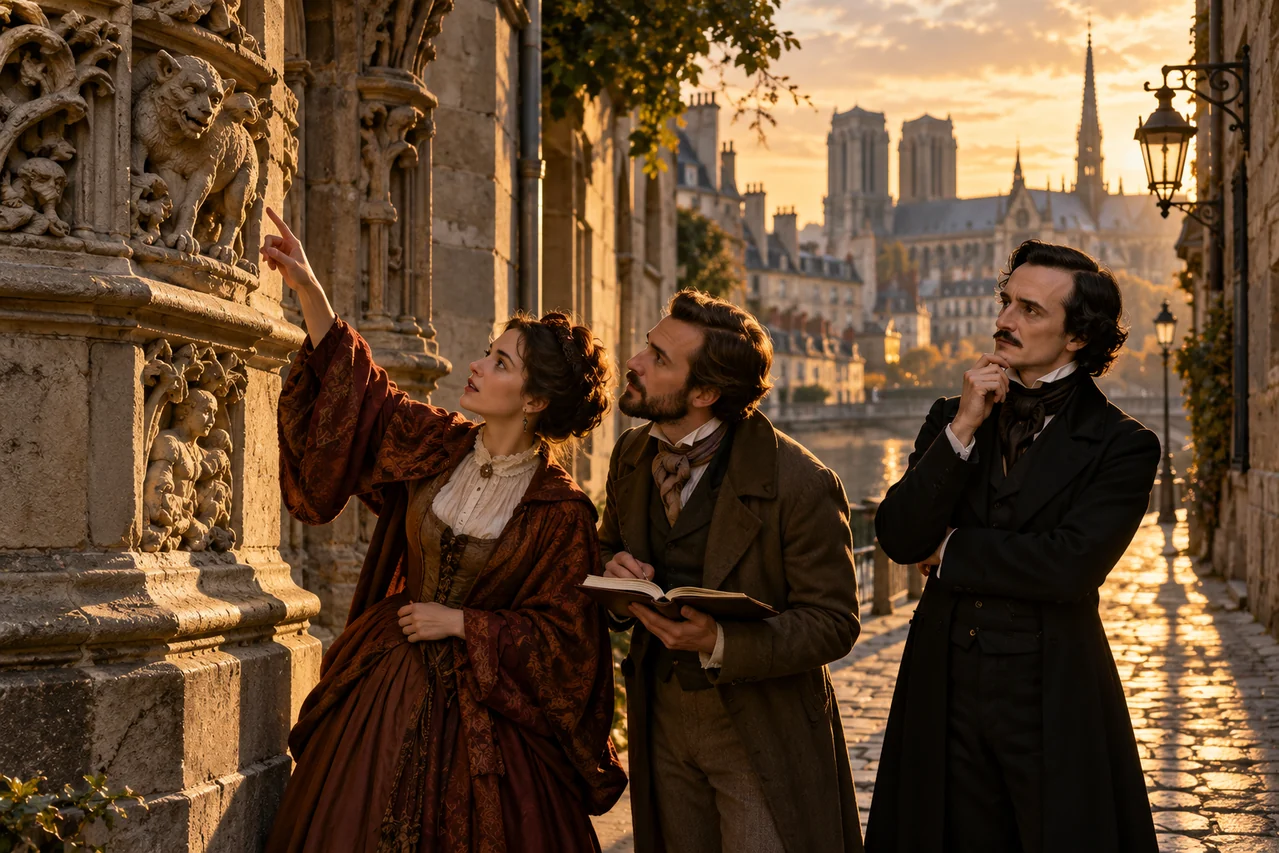
A legend connects a story to a place
A historical urban legend is not simply an inaccurate record. It is a narrative repeated because a community finds it memorable, meaningful or unsettling. A particular street or building gives the account a physical anchor, which makes it easier to imagine and retell. Over time, details can change while the place keeps lending credibility. The useful question is how the connection was formed and what people use it to explain, not whether every repeated detail can be accepted as fact.
Dark stories are unusually easy to remember
Danger, secrecy and apparent violations of ordinary life can hold attention more readily than routine events. That helps explain the survival of macabre accounts, but survival is not a measure of their reliability. A legend may compress several histories into one striking incident or assign motives that cannot be established. Careful storytelling can retain the memorable structure while showing how the tale has been shaped. The audience then gains insight into transmission as well as atmosphere.
The Île de la Cité gathers many associations
The island's long relationship with religious life, political authority and judicial institutions makes it a concentrated setting for historical imagination. Centuries of change have also altered its streets and population. Visitors encounter an open monumental landscape where earlier districts could be more densely built. Legends can become ways of picturing that absent city. The darker stories around Notre-Dame develops this relationship between visible surroundings and the urban environment that no longer survives in the same form.
Disappearance gives imagination room
When a building or street has vanished, a story may become the most accessible remaining association with it. That does not turn the account into a substitute for historical evidence. It explains why loss and urban transformation can strengthen a legend's appeal. Travelers often want to recover what they cannot see. The narrative should help them picture change while making clear which aspects belong to documented reconstruction and which have entered the realm of folklore.
Oral transmission changes the account
Retelling adapts a story to a new speaker and a new audience. Details may become sharper, characters more recognizable and motives easier to understand. These changes make a tale circulate, but can also move it farther from any event that first inspired it. Later written accounts can stabilize a version without proving it. A printed legend still requires the same distinction between a source for the story's circulation and a source confirming the alleged incident.
Literature adds another layer to the city
Victor Hugo's fictional medieval Paris influences how many people imagine Notre-Dame, while Poe offers a way to approach uncertainty and mystery. Their literary worlds should not be mistaken for historical descriptions simply because they feel convincing. This is especially important for an embodied Poe experience, since his role is theatrical rather than a claim that he lived in Paris. Fiction can reveal what a city inspires without being made to certify what happened there.
The appeal can be explored without being erased
Explaining a legend does not require mocking it or stripping it of every imaginative possibility. The uncertainty itself can be part of what draws a guest in. What is known, what is repeated and why the tale persists are all interesting questions. Telling macabre stories with care considers how to hold those questions together while respecting people involved in real events and avoiding a false certainty used merely for dramatic effect.
Treat legends as cultural heritage, with distinctions
For repeat visitors, these accounts reveal a different relationship with familiar places. They show how communities have imagined danger, justice and the unknown, rather than only how a monument was built. The Dark Legends of Paris can use that perspective to make storytelling itself visible. The result is a richer understanding of the city: factual history and inherited narrative remain distinct, but both help explain why particular streets continue to attract curiosity.
FOR YOUR GUEST ITINERARIES
If your guests want a thoughtful exploration of Parisian legends, Elyrea can help you position The Dark Legends of Paris as a cultural inquiry rather than a sequence of scares.
Discuss your itinerary