
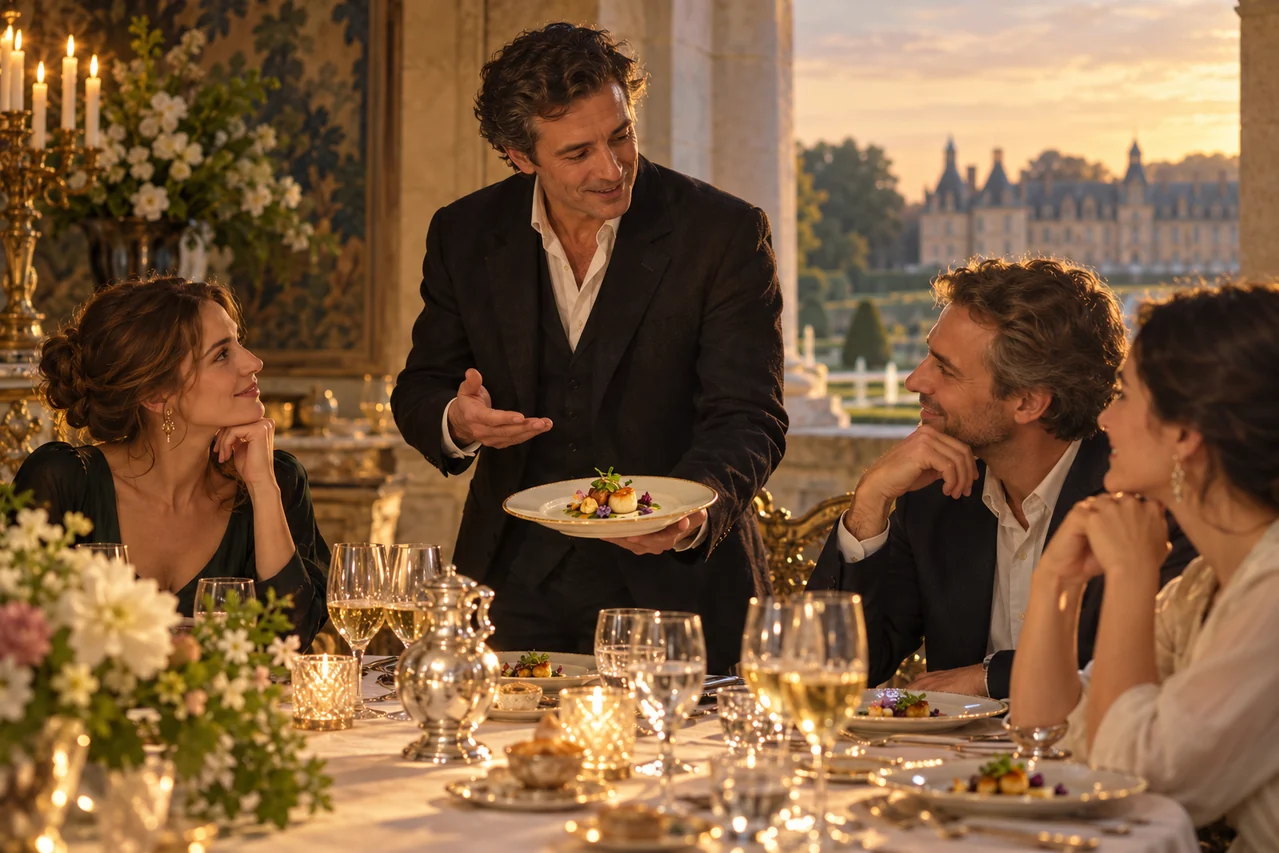
Vatel offers a different entrance to history
A prince can explain ambition, but an organizer reveals what it takes to carry that ambition out. Vatel's role gives the dinner a viewpoint from within the machinery of hospitality. Supplies, staff and timing become historical subjects that guests can understand through being at table themselves. His professional identity matters here: he should be framed as a maître d'hôtel and organizer in a seventeenth-century household, rather than reduced to a contemporary chef whose work is measured only by dishes.
An Encounter turns organization into a situation
A theatrical Vatel can raise a question about guests, resources or a disruption and invite participants to consider a response. This makes the history concrete without requiring a long preliminary lecture. The scene is narrative interpretation informed by the historical subject, not a recovered exchange from an actual reception. That distinction protects credibility while allowing interaction. Travelers can understand a practical problem through their own experience of dining, then discover why its social consequences could be very different in the world being portrayed.
The meal was part of a larger system
Receiving involved more than cooking well. The host's standing, household hierarchy, spaces and ceremonial expectations all affected how the occasion worked. A detail that appears minor to a modern guest could matter within that setting. Hospitality and power offers a useful continuation of the theme. The dinner becomes culturally substantial when these relationships explain the action around the table, allowing food and service to introduce society rather than adding disconnected historical facts between courses.
Invisible work deserves attention
Smooth service can encourage guests to overlook the coordination that makes it possible. Vatel opens that hidden perspective, while the wider workforce should remain visible too. The account is not strengthened by replacing a prince with a solitary organizer credited for every achievement. Suppliers, cooks, servants and others belonged to the operation. Guests familiar with premium hospitality may recognize the practical need for anticipation, but the historical social structures must remain distinct from those of a present-day restaurant or event team.
The final tragedy must not become a slogan
Vatel died by suicide at Chantilly in 1671, with Madame de Sévigné's correspondence providing an important contemporary account. Later stories simplified the event into a dramatic failure of fish delivery. The dinner narrative should keep the distinction between that source and later legend, treating death with restraint. It should also avoid presenting fatal pressure as an admirable ideal of excellence. The history is more meaningful when it allows guests to consider the human consequences of expectations rather than celebrate a picturesque sacrifice to perfect service.
Historical food needs honest framing
A contemporary meal can interpret the period without claiming that every preparation is an exact documented reconstruction. The food world of Louis XIV's France gives context for products, service and privilege. No unsupported invention, such as attributing Chantilly cream to Vatel, is necessary. Cultural credibility comes from explaining what the experience draws on and how the historical themes relate to the present occasion. That approach lets gastronomy and story support each other without confusing theatrical immersion with proof of culinary authenticity.
Different guests can enter through different questions
Food-minded travelers may explore how French hospitality developed, while hotel or restaurant professionals may focus on coordination. Families can understand unexpected guest numbers or missing supplies as practical problems without needing specialist knowledge. The interpretation can deepen according to curiosity, keeping the character and historical setting coherent. This range of entry points makes the Encounter useful within private and group programs. Tailoring means choosing emphasis and discussion, rather than promising unverified formats or turning the seventeenth-century figure into a generic contemporary service expert.
A dinner becomes a remembered cultural chapter
Vatel can connect with a château-focused day or a wider journey through French art de vivre, with locations and practical configurations confirmed through Elyrea. Marie-Antoinette and Veuve Clicquot open distinct later chapters rather than extensions of the same biography. The strongest outcome is not only that guests recall what they ate. They remember a person, understand the work behind receiving and retain questions about prestige and pressure. Character, place, narrative and interaction give the dinner a role in the cultural journey that extends beyond the meal itself.
FOR YOUR GUEST ITINERARIES
Want to add a historical narrative to your guests’ gastronomic stay? Contact Elyrea about integrating A Dinner with Vatel into a private or group itinerary.
Discuss your itinerary