
Decide the purpose before choosing the format
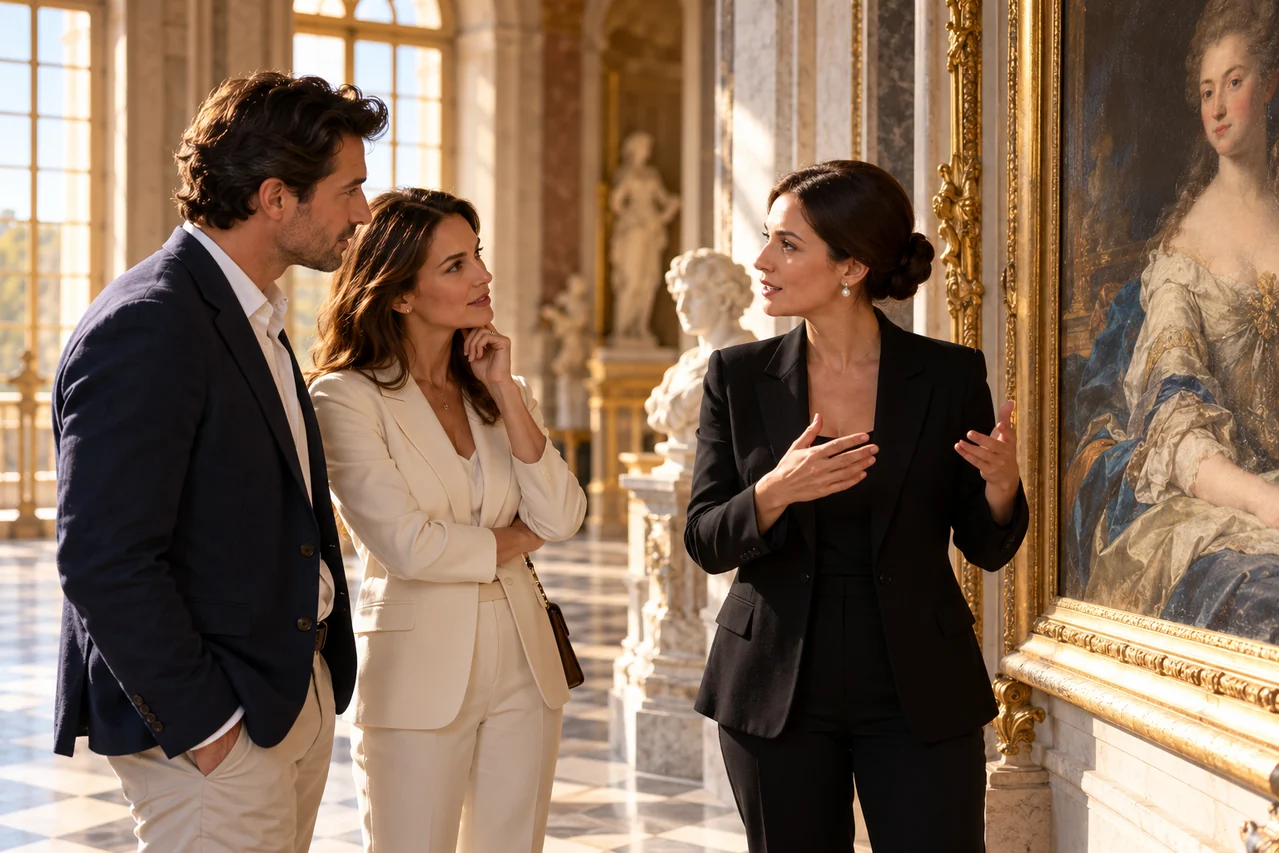
An impressive-sounding format is not automatically the right one for a particular traveler. Ask whether the guest needs broad orientation, detailed interpretation of the monument or a closer exploration of Marie-Antoinette through dialogue. These aims overlap but are not identical. A first-time visitor may need the framework of an excellent guided visit, while a returning guest may already have it. Choosing by purpose avoids a false competition between history and performance, allowing an advisor to explain what each part of the program contributes.
What an excellent guided visit can provide
A contemporary guide can connect different reigns, interpret architecture and place events within a broad chronology. They can compare perspectives and discuss later consequences with historical distance. At Versailles, where travelers encounter a vast amount of material, this capacity for synthesis is valuable. Understanding the court's daily world illustrates one subject that benefits from a wider explanation. A guided visit can make the estate legible before a more focused encounter, giving the guest a map of relationships rather than only a sequence of rooms.
What the embodied perspective changes
When Marie-Antoinette becomes the person addressed, questions about reputation, private space or court expectations acquire another form. The traveler is engaging with a performed interpretation of a historical figure, not an archival witness. This perspective can be situated within a particular moment or set of circumstances, recovering some of the uncertainty that later hindsight removes. The character does not need to reproduce the guide's comprehensive view. Its value is to let the visitor explore a human position within the larger history already established.
Participation should deepen the subject
Asking a question requires a traveler to identify what they want to understand. A reply can challenge an assumption or invite further observation. This gives the exchange a different relationship with attention from listening alone, but not everyone needs to participate equally. Some guests are more comfortable observing a conversation than speaking themselves. The advisor should consider that preference when recommending the format. Interaction is useful because it supports inquiry, not because every moment has to be active or every traveler has to become part of the performance.
Vivid interpretation still needs historical care
Costume and atmosphere cannot turn a doubtful claim into an established fact. The brioche attribution remains unsupported, Fersen's exact relationship with the queen remains debated, and the Hameau requires context beyond the farming caricature. Exploring Marie-Antoinette and Fersen carefully shows why uncertainty can strengthen rather than weaken a narrative. A character-led experience earns cultural value when its dramatic language serves understanding. The guide and the encounter can both address these subjects, provided the distinction between evidence and interpretation stays clear.
Adjust the balance for first-time and returning visitors
A newcomer may benefit from an introduction to the estate before focusing on Marie-Antoinette, or from a concise character-led opening that prepares later observation. A returning traveler can make the encounter more central and select estate spaces according to the questions raised. Rediscovering Versailles after a previous visit helps identify that shift. Avoid assuming the same sequence suits every guest. The practical order needs to support the cultural intention while respecting actual arrangements and the traveler's energy.
Families and specialists bring different expectations
An identifiable person can help younger travelers enter the story, while layered explanations keep adults engaged. Specialists may be less interested in atmosphere than in the opportunity to discuss sources, controversies and interpretive limits. Neither audience requires a simplistic or spectacle-heavy treatment. An advisor should establish what interests the group and how they prefer to engage. For premium guests, the meaningful value may lie in time for serious conversation and coherent pacing, rather than the claim that one format is inherently more exclusive than another.
Combine the formats only when each has a clear role
A useful sequence can establish court context, offer the Marie-Antoinette Encounter and then use selected places to examine the questions that emerge. Another may begin with the estate and bring the guest's observations into the encounter afterward. Planning a coherent Marie-Antoinette day should preserve those distinct purposes. A longer journey can continue in Paris through Tea with Marie-Antoinette without repeating the same overview. The right choice is the combination that adds understanding for this traveler, with enough time to absorb what each approach offers.
FOR YOUR GUEST ITINERARIES
Choosing the right balance of guiding and character-led discovery at Versailles? Our team can help place Marie Antoinette, Rebel Queen within your guests' wider visit.
Discuss your itinerary