
The monument could also be an instrument
A tower of exceptional height offered opportunities for observation as well as sightseeing. Eiffel recognized that its position and structure could support scientific investigations. Thinking of the landmark as an instrument changes how it is read: height becomes useful evidence, not just a source of impressive views. Travelers can connect the monument's public identity with quieter forms of work. This scientific chapter also shows that the meaning of a construction can evolve after its opening celebration is over.
Weather belongs to engineering history
Meteorological observations associated with the tower linked its physical setting to questions about the atmosphere. For visitors, weather is usually a practical consideration affecting the day's views or comfort. In this context it becomes part of the intellectual story. Measuring and observing conditions could help build knowledge, while the tower supplied an unusual platform. The relationship is a useful reminder that architecture and environment are connected, and that engineering often depends on understanding forces and circumstances outside the structure itself.
Wind was more than an obstacle
An engineer working with major structures must take wind seriously. Eiffel's interest developed into investigations of airflow and the behavior of different forms. This progression connects a practical design concern with a broader field of inquiry. Travelers can follow the idea without specialized training: a force that affects a tower also raises questions relevant to objects intended to move through air. Curiosity about one problem can open another, and research does not always follow the divisions found in a museum's categories.
Wind tunnels made questions experimental
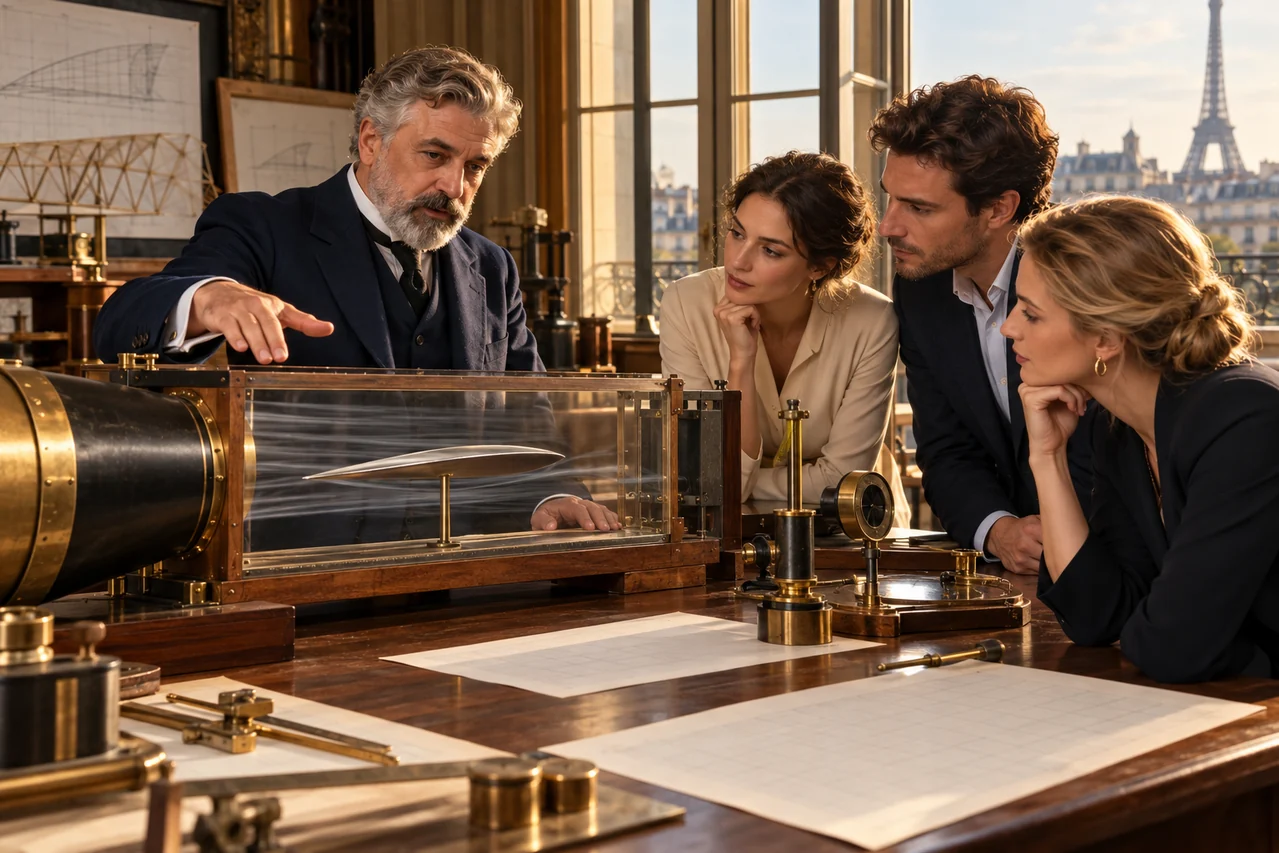
Eiffel's wind-tunnel work contributed to aerodynamic knowledge as aviation developed. A controlled experimental setting allowed researchers to examine how air behaved around forms under study. The contrast is appealing: the engineer associated with an enormous stationary landmark also took part in work relevant to flight. It is important, however, to retain the collective nature of scientific development. His contribution belongs within a wider field, rather than supporting a claim that one celebrated individual created modern aerodynamics on his own.
A later chapter with earlier roots
Scientific work became especially significant in Eiffel's later life, but it should not be portrayed as a sudden interest with no connection to his engineering career. His practical concerns already involved calculation, observation and the response of structures to forces. The later emphasis extends that intellectual continuity. His wider career gives the necessary background, allowing travelers to see an engineer and entrepreneur whose activities changed over time without turning the biography into a simple transformation from one unrelated identity to another.
Usefulness helped the tower endure
Scientific investigations were part of the argument that the tower had value beyond being a visitor attraction. Radio communications subsequently became particularly important to that continuing utility. The tower's survival involved several factors, so research should not be presented as the sole explanation. The broader point is more useful: a major structure can acquire new purposes as knowledge and technologies change. Its preservation may depend partly on how effectively those purposes are recognized and developed.
A route into science for families
Children and teenagers can begin with visible questions: why does the tower have this shape, how might wind affect it, and what could its height help someone measure? These questions encourage reasoning rather than a recital of records. An advisor can adjust the level for the family's interests without making the cultural experience feel like a classroom exercise. The monument supplies a shared reference, so relatives with different levels of technical knowledge can still participate in the same conversation.
Curiosity as the thread of an Encounter
Elyrea's Eiffel by Eiffel can use the historical character to bring scientific interests into a story already grounded in place. The appeal for an engineer may lie in experimentation; for an entrepreneur, in extending the usefulness of a project; for a younger traveler, in discovering connections between buildings, weather and flight. This angle should remain distinct from a general tower construction account. It invites visitors to consider what Eiffel wanted to understand after his most recognizable structure had already become a public success.
FOR YOUR GUEST ITINERARIES
Designing Paris for science-minded families or guests interested in innovation? Contact Elyrea about the scientific dimension of Eiffel by Eiffel.
Discuss your itinerary