
A royal project larger than a single building
When Leonardo da Vinci settled near the French court in 1516, he brought more than the prestige of a renowned painter. Francis I could call on a mind accustomed to treating architecture, water, movement and ceremony as connected problems. Romorantin, a town with strong royal associations and ties to Louise of Savoy, became the setting for an extraordinary ambition. The proposal was not limited to an isolated residence. It joined a palace to hydraulic infrastructure and a wider urban order. The project never achieved the monumental form suggested by the drawings, but that does not make it marginal. Its incompleteness reveals what the king expected from Leonardo and how the master understood a city as a living system.
Why Romorantin mattered to Francis I
Early in his reign, Francis I was still defining the principal settings of a young and mobile court. Romorantin offered a family connection and a landscape in which large-scale transformation could be considered. A new complex could project royal power while signaling an openness to Italian models. The commission also clarifies Leonardo’s French position. His title as First Painter, Engineer and Architect to the King was not an empty honor; it created room for work well beyond painting. Leonardo’s final years in Amboise show how that freedom developed within the security of royal patronage. Romorantin was one expression of the intellectual range the French court hoped to use.
A palace designed for court and administration
Studies associated with Romorantin describe an ensemble in which a palace, service areas, courtly life and administration would operate together. A royal residence had to display power while organizing the daily needs of a large community. Leonardo considered routes, levels and the separation of functions, questions that had occupied him in earlier settings. It would be misleading to treat every drawing as part of one final construction plan. They are better understood as evidence of thought in motion, with alternatives tested and practical problems investigated. Architecture becomes an instrument of government: lodging, circulation, supply, reception and royal representation belong to a single system rather than to unrelated buildings.
Water as infrastructure and method
Water occupies a central position in Leonardo’s thinking. At Romorantin, canals were not merely picturesque surfaces intended to reflect a palace facade. They addressed movement, sanitation, supply and the relationship between the proposed complex and its territory. The city was ideal not because it existed outside reality or followed a perfect diagram, but because its functions were meant to work together. The proposal drew on decades of attention to rivers, machines and the behavior of water. In this French setting, scientific curiosity became an architectural and political proposition. The city could be understood as a body whose circulation required observation, maintenance and coordination.
Did construction actually begin?
For many years, Romorantin was described primarily as a city that remained on paper. Research presented by the Clos Lucé suggests that work did begin before the project was abandoned. The distinction deserves careful language. It prevents the scheme from being dismissed as a consequence-free dream, but it also avoids reconstructing a building campaign whose every detail is known. Drawings, written records and archaeological evidence do not all offer the same degree of certainty. That uneven record gives the subject much of its value. It demonstrates how architectural history develops through documents, field evidence and changing interpretation rather than through a simple opposition between what was built and what was imagined.
From Romorantin to Chambord, without a false signature
The Romorantin project was abandoned, and the monarchy’s great architectural focus soon shifted toward Chambord. It is tempting to say that the château directly replaced Leonardo’s city or embodied each of his ideas. Chronology invites comparison but does not prove identity. Leonardo’s death in 1519, Francis I’s decisions and political or technical circumstances form a more complicated setting. The Clos Lucé presents the transition toward Chambord as a probable interpretation. A responsible narrative can therefore discuss continuity of ambition, movement of concepts and intellectual proximity without naming Leonardo as the sole author of a monument that the evidence does not allow us to assign so simply.
An invisible project can still produce a powerful visit
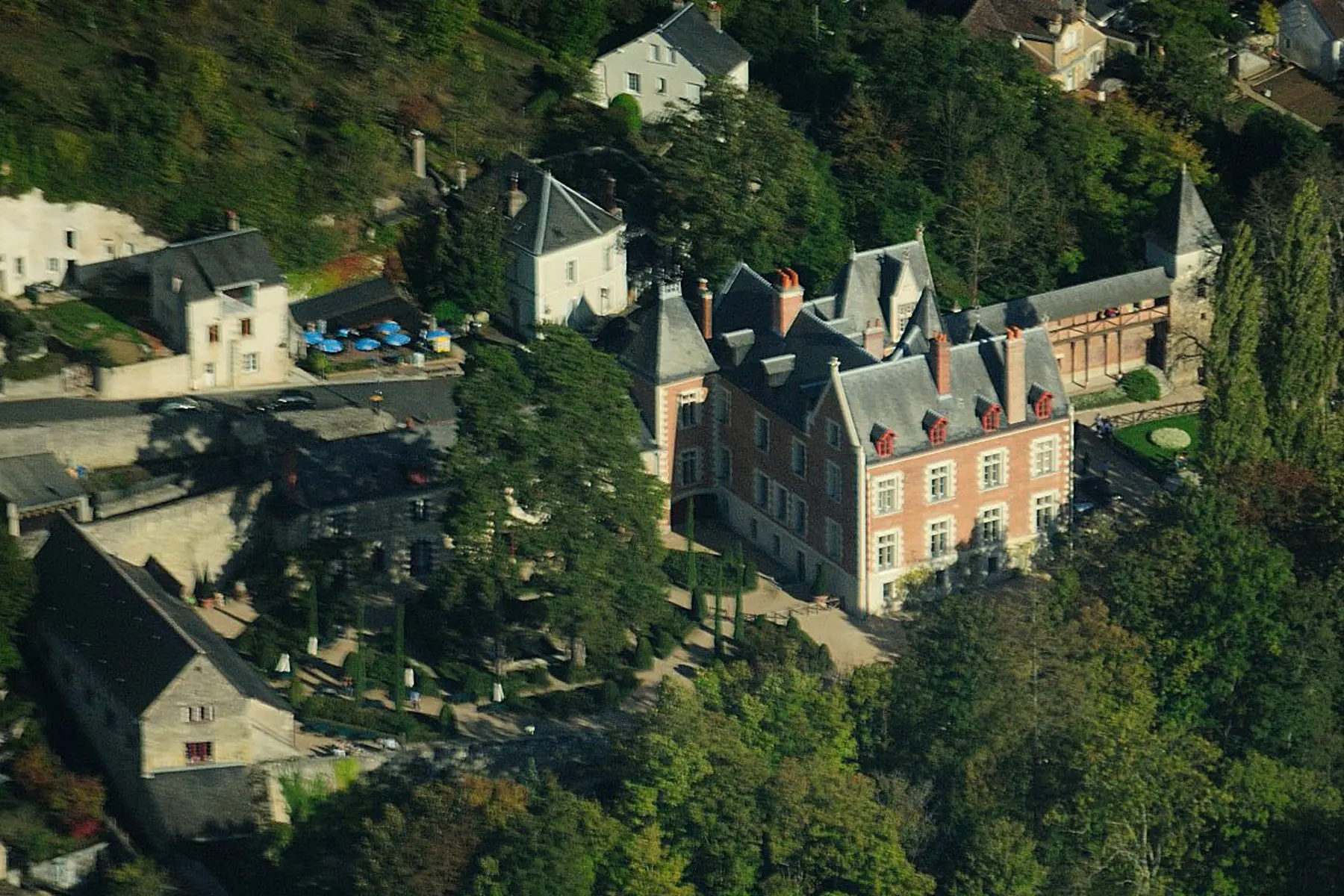
Romorantin raises a compelling interpretive problem: how do we discuss something that does not survive in the expected form? The answer is not to promise travelers the spectacular remains of a finished ideal city. It is to read drawings, landscapes and royal decisions together. At the Clos Lucé, a multimedia room and model devoted to the scheme help make its scale intelligible. Much as an authored day around Monet at Giverny connects a working environment with creative choices, Leonardo’s residence can reconnect abstract plans with the practice of design. The missing monument becomes a way to understand how ideas are tested, revised and sometimes redirected.
B2B guidance: make the unfinished project a question
For travel advisors, Romorantin can expand a Loire Valley program beyond a sequence of completed châteaux. The Elyrea Encounter devoted to Leonardo da Vinci can be organized around one question: what might a court city designed by an artist-engineer have become? The account must distinguish surviving drawings, work proposed or possibly begun, and modern reconstructions. That honesty adds value because it lets clients participate in the historical investigation. Premium storytelling depends on the precision of its hypotheses and on connecting Amboise, Romorantin and royal ambition without turning a possibility into fact. An unfinished design can reveal a wider vision than a finished room when its evidence is handled with care.
FOR YOUR GUEST ITINERARIES
Planning an exceptional Loire Valley journey? Elyrea can place Romorantin within an Encounter devoted to Leonardo da Vinci.
Discuss your itinerary