
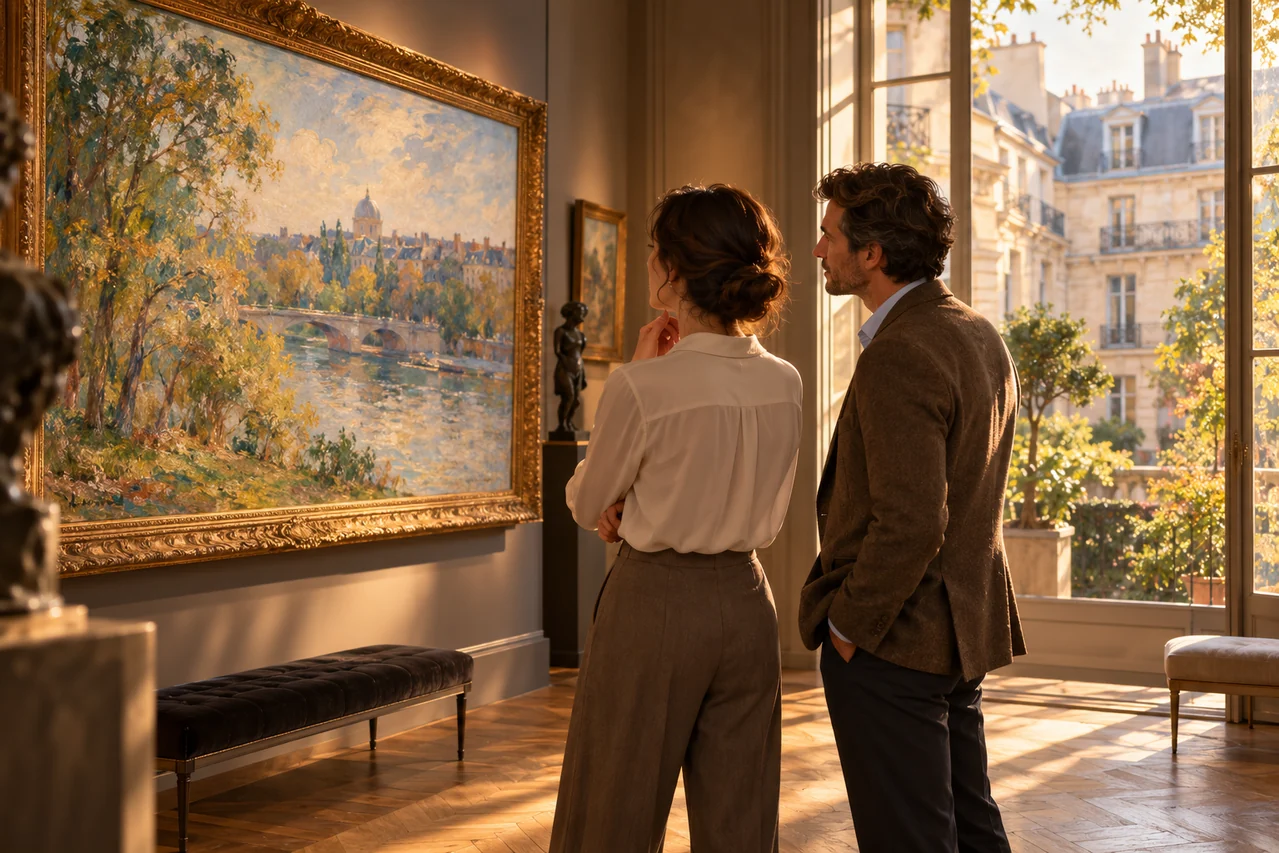
Decide what the guest wants to understand
A collector, a first-time museum visitor and someone who loves Monet's gardens have different priorities. Ask whether the interest lies in a painter, technique, women artists, reception or the relationships between works and places. This clarifies which collections and experiences deserve time. A personalized art stay should adjust intellectual focus as well as comfort. Trying to include every famous painting can produce a less meaningful experience than selecting a smaller number that respond to a clear question.
Introduce the work before museum certainty
An Encounter with Père Tanguy offers a perspective from the practical world of supplies, support and uncertain recognition. His role among modern painters helps explain what happens before an image acquires a secure place on a museum wall. This can precede a collection visit or follow it for knowledgeable guests who want to reconsider familiar works. The perspective does not replace looking at paintings. It provides additional questions about how they were made, shown and received.
Use Montmartre as an entry, not the whole movement
Renoir and the district's contemporary social life make Montmartre a useful narrative setting. The neighborhood also belongs to other artistic generations, so it should not be presented as the exclusive center of all Impressionism. Its development as an artistic district explains the environment through space, networks and everyday subjects. Van Gogh and Picasso can appear within the wider history only with their distinct chronology and affiliations made clear. The guest learns more from that progression than from an expanded but inaccurate category.
Choose a museum focus rather than an exhaustive circuit
The Musée d'Orsay offers major nineteenth-century collections, but attempting to see everything can diminish attention. A focused selection around light, modern life or a particular career may be stronger. The Orangerie's Nymphéas ensembles allow a different relationship between painting, space and the viewer, bringing Monet's later development into view. Actual visits and access should be checked when planning. Editorial context helps establish why a collection serves the itinerary; it does not substitute for confirmed arrangements.
Include women as central participants
Morisot and Cassatt belong within the artistic story rather than as an optional supplementary topic. Their work raises questions about social space, observation and the conditions facing women artists. Cassatt also creates a meaningful transatlantic connection for American guests. The varied individuals behind Impressionism help keep those concerns alongside Monet, Renoir and others. The result avoids a simplified succession of a few famous men and allows guests to see how varied experiences contributed to modern painting.
Let Giverny change the pace
A Giverny excursion moves from Parisian streets and collections into an environment Monet cultivated and painted. The garden offers a relationship between observation and making different from an urban art network. Monet's garden as a creative subject explains that interplay. The village belongs to a later stage in his career, not the beginning of the movement. Giving it a distinct day or substantial chapter preserves the time needed to look, rather than reducing a meaningful landscape to a short photo opportunity.
Extend toward Auvers with a clear distinction
Auvers-sur-Oise can continue a journey into the transformations of late nineteenth-century art through Van Gogh. He should not be presented as an additional Impressionist. The extension works because it shows how influences are absorbed and changed, bringing another personality and relationship with place into view. For a deeply interested guest, separate excursions may be preferable to compressing several destinations together. Logistics should serve attention and narrative coherence instead of forcing an idealized artistic chronology into an overfull day.
Protect the quality of looking
Alternating streets, collections, narrative interaction and landscapes helps avoid fatigue. Companions with less specialist knowledge can follow biographies and places while the enthusiast pursues deeper questions. A guest may leave most moved by a small detail or an unexpected story rather than the work expected to be the highlight. Advisors can create the conditions for that discovery without dictating it. A successful art itinerary provides time, context and a clear progression, letting personal attention determine what becomes memorable.
FOR YOUR GUEST ITINERARIES
Tell our team which painters and themes interest your guests. Elyrea can help connect Père Tanguy with a focused Paris art itinerary and suitable excursions.
Discuss your itinerary