
A famous address that is not on the map
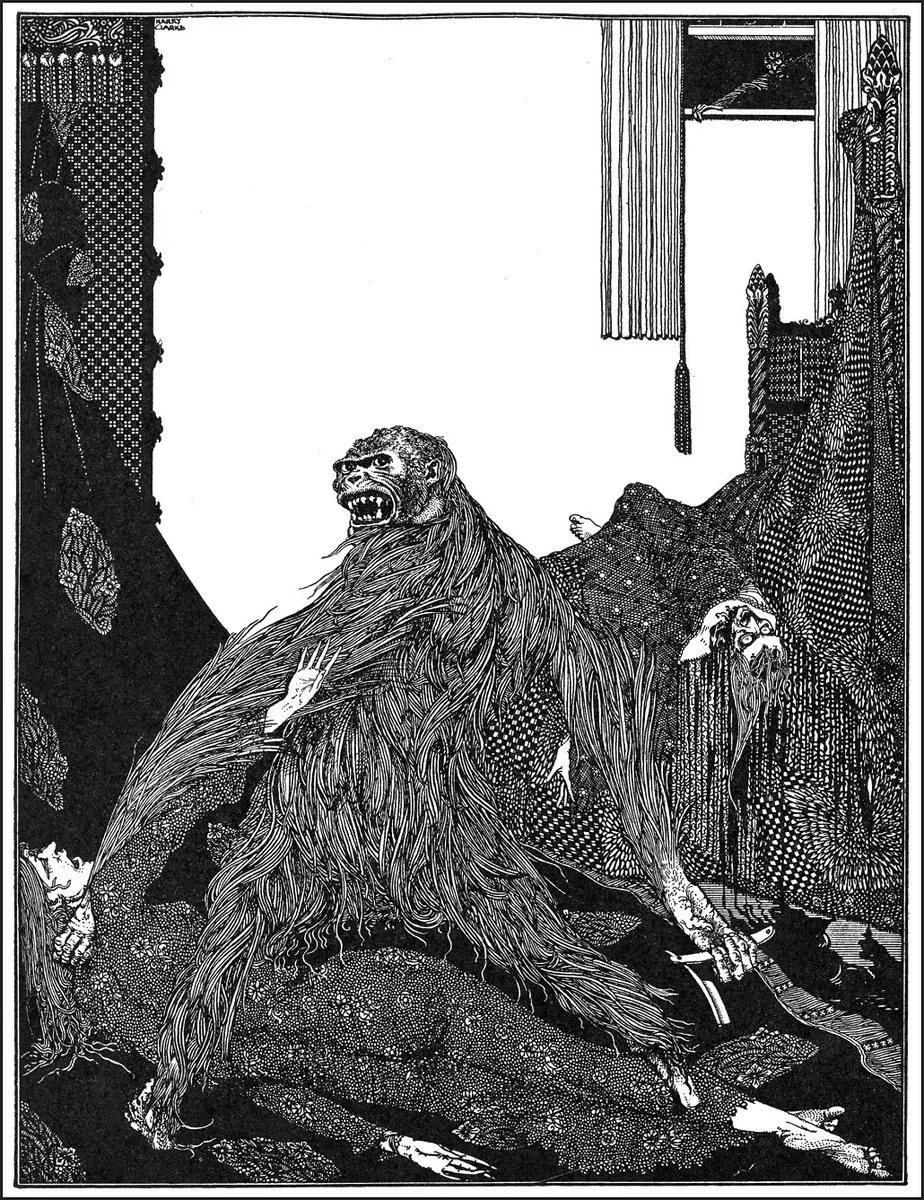
The short answer is no: Edgar Allan Poe’s Rue Morgue is fictional. In “The Murders in the Rue Morgue,” published in 1841, Poe places the crime inside a recognizable Paris without supplying a street a traveler can locate. He names the real Quartier St. Roch and then invents the address his mystery requires. That distinction prevents a common mistake. A plausible French street name is not necessarily a vanished historical site. Here it is a literary instrument. Poe provides enough geography for readers to accept the city, then preserves the freedom to construct the perfect setting. Looking for Rue Morgue therefore becomes less a search for a plaque than an inquiry into how fiction produces credibility from selected real details.
Why Paris could launch the modern detective story
The Poe Museum describes the 1841 tale as the first modern detective story. C. Auguste Dupin does not yet hold the professional title later readers would expect, but he reasons from testimony, contradiction and a sealed crime scene. Paris gives Poe the right modern setting: a vast capital, organized police, newspapers, crowded buildings and a population in which many voices overlap. The city lets him contrast individual analysis with institutional procedure. It also creates a world where information travels quickly but arrives in fragments. That function matters more than exact street-by-street accuracy. Poe’s Paris is an intellectual laboratory in which Dupin can demonstrate “ratiocination,” a method of reconstructing what others have seen but failed to understand.
Real districts assembled from afar
Poe did not need to have lived in Paris to create the effect. The story combines French names, an identifiable district, newspapers, urban description and cultural knowledge available through books and transatlantic exchange. Dupin and the narrator retreat to an old house in a secluded part of the Faubourg St. Germain, while the crime occurs in the Quartier St. Roch. Both are real Paris references connected by fiction. They should not be converted into a Poe biography or proof of residence. Instead, they reveal his skill at composing a mental capital. For travelers, this distance is illuminating: a literary city can feel socially and atmospherically precise without reproducing the cadastral map.
How the name creates false certainty
To English-language readers, “Morgue” sounds both French and ominously clear. That is part of the invention’s power. Poe chooses a word capable of carrying coldness and mystery across languages, then turns it into a street name. No official Paris address needs to have existed for the device to work. Rue Morgue functions like a narrative sign above the door: it announces the mood while appearing to belong to the ordinary fabric of the capital. Translations, films and repeated references have strengthened that apparent reality. Responsible interpretation separates the wording of the original tale, the real geography it borrows and the cultural afterlife added later. The legend becomes more interesting when travelers can see how it was built.
The locked room is an architecture of thought
The crime appears impossible because doors and windows seem to exclude escape. Poe makes the interior into a demonstration. Every opening, piece of furniture and witness statement must be reconsidered, not simply to increase horror but to expose the investigators’ assumptions. The imaginary street leads into a logical room. Paris becomes a network of signs: accents people think they heard, newspaper reports, physical traces and urban habits. The reader learns that seeing is not enough; observation means testing relationships among clues. A cultural encounter should emphasize this structure rather than sensational violence. It explains why Dupin became a model for later fictional detectives and why the tale still belongs in a thoughtful exploration of literary Paris.
Walking Poe’s Paris without inventing a landmark
A rigorous itinerary will not promise “the real Rue Morgue.” It can explore the contexts the fiction activates: the Saint-Roch area, nineteenth-century newspapers and policing, arcades where lighting and crowds changed the experience of night, or the Île de la Cité as a landscape of justice and imagination. Each stop should be named accurately as urban context, thematic echo or literary continuation. Our article on Poe and the invention of the modern detective extends the discussion. Any museum, monument or special access added to a program requires its own current operational check; editorial proximity never means tickets or services are included.
Embodied interpretation without a false reconstruction
The Elyrea Encounter devoted to Paris’s darker legends can give voice to Poe and Dupin’s method without pretending to reconstruct a documented site. The distinction matters. A professional performer interprets a work and its cultural imagination; the performance is not an archive or eyewitness account. Guests can compare observed Paris with narrated Paris, recognize the techniques that make fiction persuasive and debate the birth of detective literature. The subject suits dedicated Poe readers and travelers interested in urban history, provided the promise avoids a lurid crime hunt. Emotion comes from the intelligence of the text and the immediacy of the character, not from fabricated topographical authenticity.
B2B framing: sell an inquiry into fiction
For a travel advisor, the strongest promise is cultural inquiry: how did an American writer turn Paris into the capital of detective reasoning? The brief should note guests’ familiarity with Poe, sensitivity to violent themes and preferred balance among walking, reading and conversation. The experience can connect with Notre-Dame, the history of justice or another author without implying that geographical proximity creates a commercial package. Poe or Esmeralda around the Île de la Cité helps clarify the intent. The reward is not finding a lost street. It is understanding why an invented address has felt as though it belonged to Paris for nearly two centuries.
FOR YOUR GUEST ITINERARIES
Planning a private cultural itinerary? Elyrea can help you weave this perspective into your guests’ journey.
Discuss your itinerary