
Ask what remained interesting after the first visit
When a guest says they have already done Versailles, the advisor should ask which part they remember most. It may be the scale of the palace, court etiquette, the queen's personal spaces or the questions surrounding her reputation. That response identifies a possible next chapter. Returning does not always mean finding another building or a less familiar room. It can mean giving a known subject more time. A focused encounter becomes relevant when it answers a curiosity left open by the wider monument visit.
Move from the palace to one person's trajectory
A comprehensive Versailles introduction has to balance architecture, gardens, reigns and institutions. Marie-Antoinette is one figure among several. A dedicated conversation can narrow the field and examine her life in greater depth. The traveler no longer needs every basic context repeated, although essential distinctions still matter. The woman behind the queen's legend offers a useful foundation for this shift. The value comes from concentration: fewer subjects can permit more precise questions and a more personal understanding of the figure.
Use familiar myths as a test of understanding
Even informed visitors may retain simplified accounts: the brioche phrase, a wardrobe that supposedly bankrupted the kingdom, or the queen simply pretending to be a farmer at the Hameau. Questioning these ideas should lead toward broader understanding, not just a list of corrections. What makes an attribution persuasive? Why can spending become a political symbol larger than its economic role? Examining the famous quotation gives the returning guest a clear example of the gap between historical evidence and the stories that remain easiest to repeat.
Explore how reputation became politically useful
The queen's foreign origins, gender and position shaped the hostility directed at her. Court rivalry and the effects of the necklace affair also reveal how an established image can influence interpretation of events. These questions may engage a guest who has moved beyond a basic biography. They should not produce an automatic defense of every royal action. A deeper experience allows agency and misrepresentation to be considered together, giving the traveler a more demanding and useful framework than either the frivolous queen or the wholly innocent victim.
Treat Fersen as a nuanced historical relationship
Returning visitors may already know Axel de Fersen's name and want to understand more about his place in Marie-Antoinette's life. Their closeness and emotionally intimate correspondence matter, while the exact nature of the relationship remains debated. His involvement in the attempted flight of 1791 also connects the personal association with political events. The conversation can therefore be substantive without pretending that every private question is settled. Acknowledging the distinction between established proximity and disputed interpretation respects the guest's knowledge rather than reducing the story to romance.
Bring the Paris chapter into view
After October 1789, Marie-Antoinette's story unfolds in a changed relationship with the capital. The Tuileries setting, the Conciergerie and present-day Place de la Concorde help trace the passage from monarchy to imprisonment and execution. These places should be selected according to the question and treated without sensationalism. Exploring Marie-Antoinette's Paris can extend what the guest understood at Versailles. The geographical change also makes clear that the queen's life did not end when she left the spaces most visitors associate with her.
Use conversation to build from existing knowledge
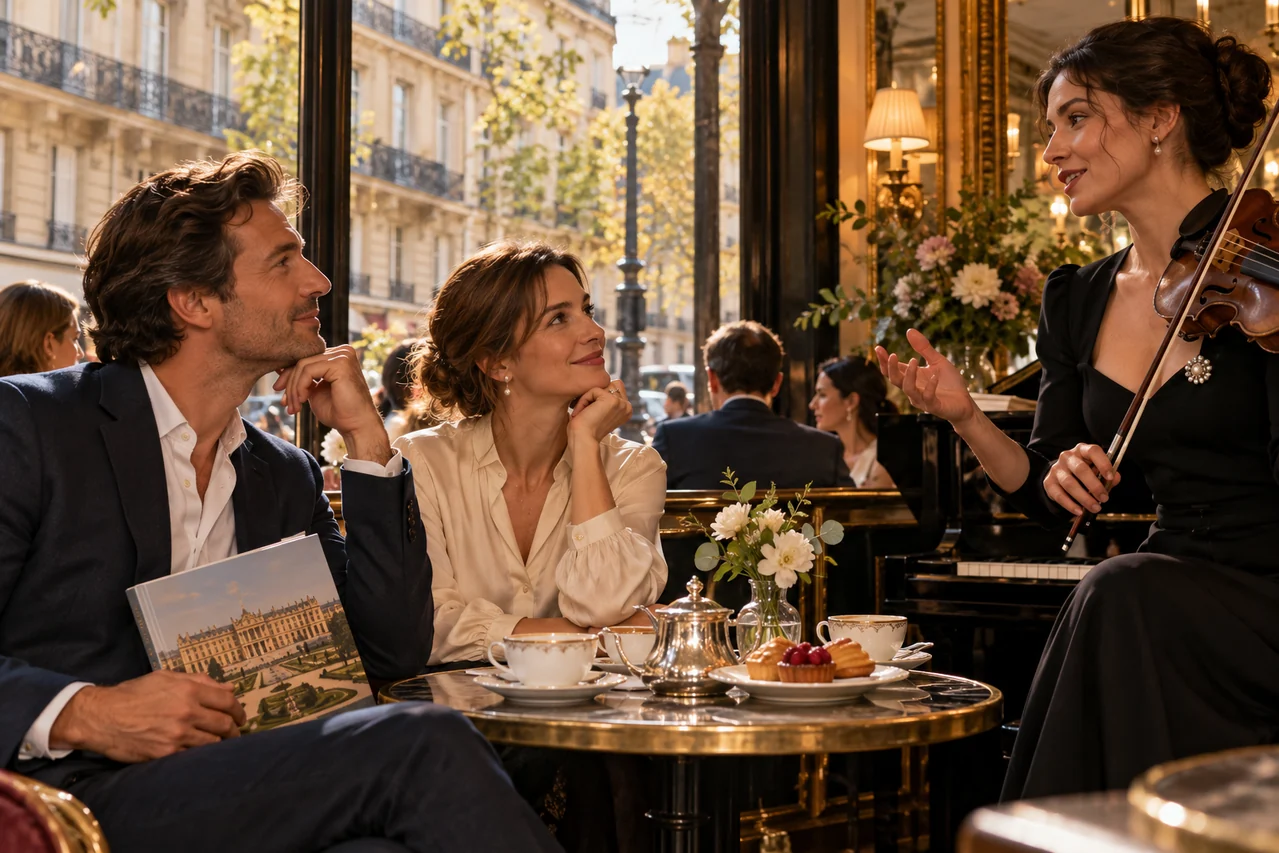
Tea with Marie-Antoinette at Drouant creates a present-day setting for an exchange with an interpreted character. A returning visitor can bring specific questions rather than begin again with the broadest introduction. The performance remains distinct from documentary testimony, but it gives the cultural material a human point of address. An advisor should communicate the guest's interests to help discuss the appropriate place of the encounter in the program. The result can feel like a continuation of an established curiosity rather than another version of the first visit.
Design the next experience with restraint
A deeper subject does not necessarily require a longer or more crowded day. One encounter and a carefully chosen Paris chapter may provide enough new material. Give the guest time to reflect and leave room for companions who may have a different relationship with the history. If Versailles returns to the program, choose a specific new question rather than automatically repeating the full route. The advisor's recommendation should explain why this Marie-Antoinette experience is the next step for this guest, not merely another available royal activity.
FOR YOUR GUEST ITINERARIES
Your guests already know Versailles? Our team can help use Tea with Marie-Antoinette to deepen the subjects that interested them most on their earlier visit.
Discuss your itinerary